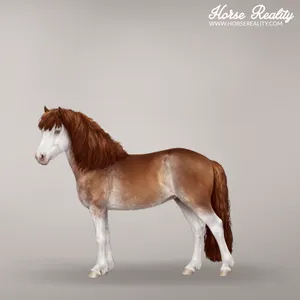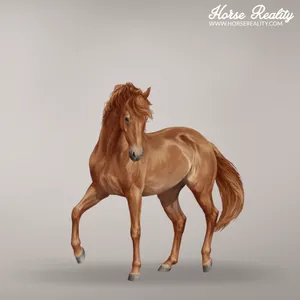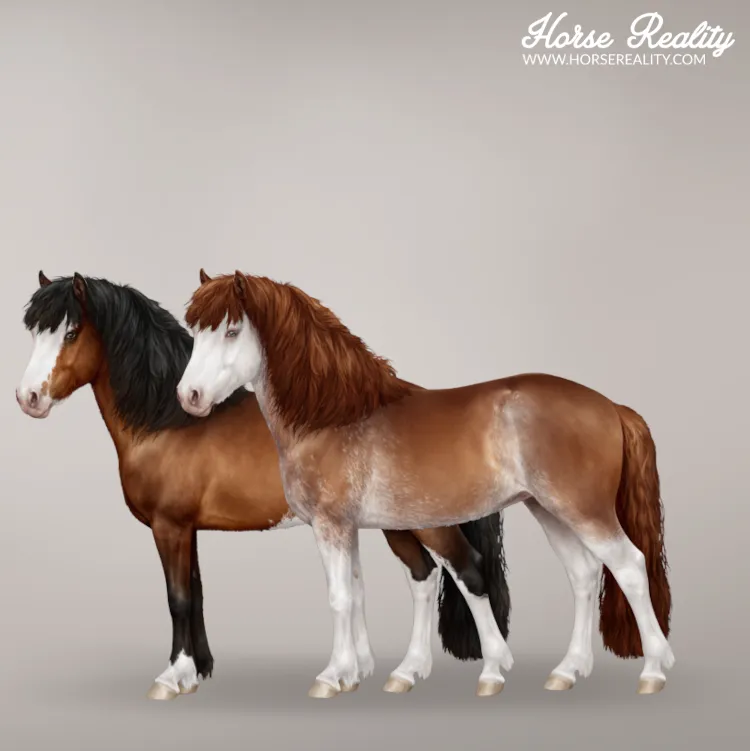
There is a lot of variety in the type of pattern and amount of white caused by each white spotting variation. The expression varies from leg and face markings with or without white belly patches, to even a nearly “white” (also called max white) phenotype.
The white markings and patches often have irregular, jagged edges. Leg markings tend to run higher up the front side of the legs. Face markings can wrap around the lower lip and/or jaw of the horse, while the area around the eye often remains solid. White ticking on the body is also quite common. It may also cause blue eyes.
The first variant to be discovered was sabino1; this naming convention has since been abandoned and all the following alleles have been named W1-W39. The term "sabino" is still often used to describe irregularly shaped white markings on horses with a (yet) unknown cause.
For some time, white spotting was also named dominant white as it was thought the patterns were all dominant and non-viable (embryonic lethal) when homozygous. However, we now know this is not always the case.
Patterns
W8
W8 is a white spotting pattern present in the Icelandic Horse.
 Hannelore Roodhooft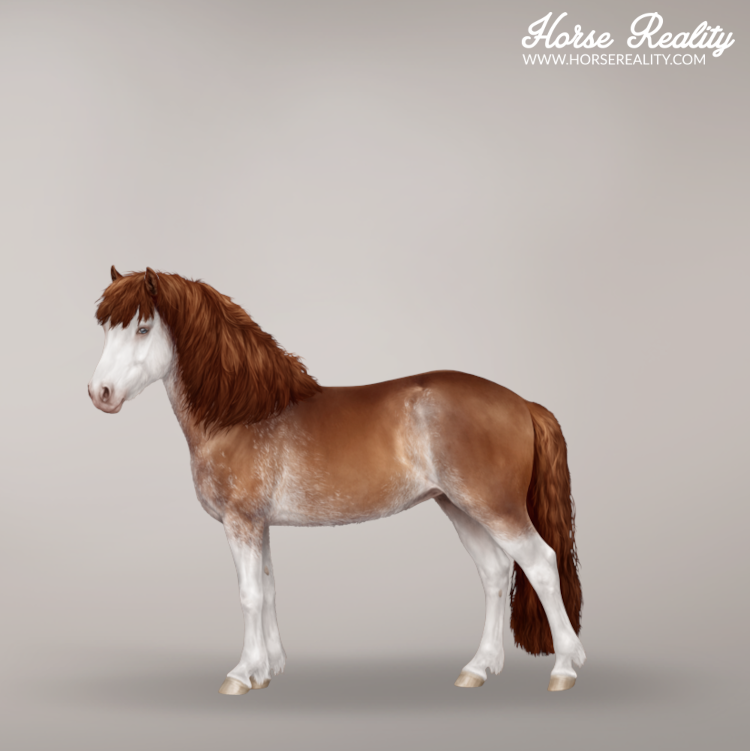
Gene
KIT
Presence in horses
White spotting can occur in many different breeds. Some variations, like W20, are widespread, but most are specific to a certain family in a breed, or even just a single horse.
Learn while playing! Discover how genes shape colors and patterns in our realistic horse breeding game, Horse Reality