Appearance
| Foals | 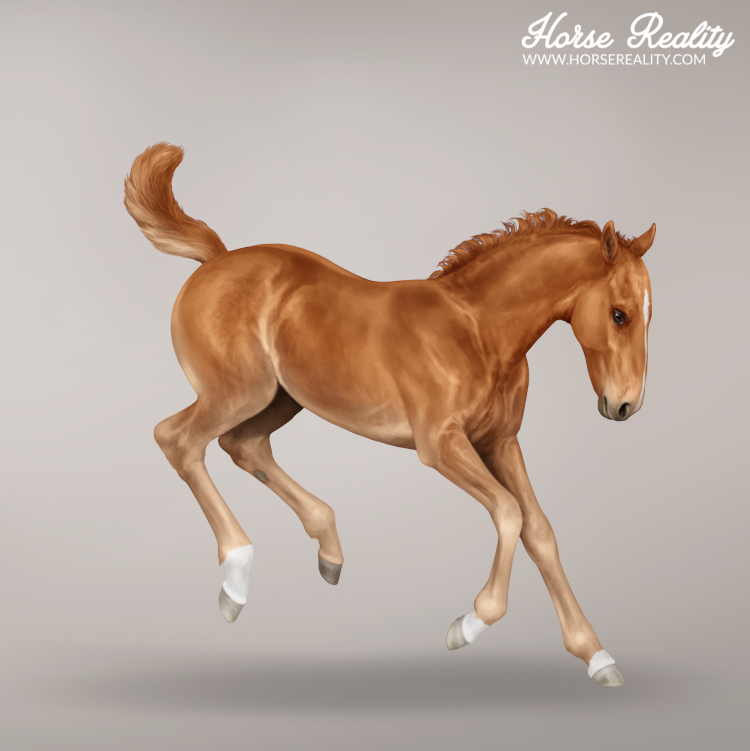 |
Foals look the same as regular chestnut foals. It can take years for the coat to start darkening. |
|---|
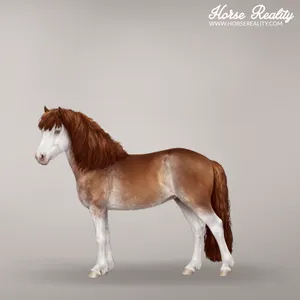
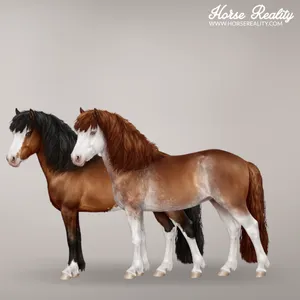
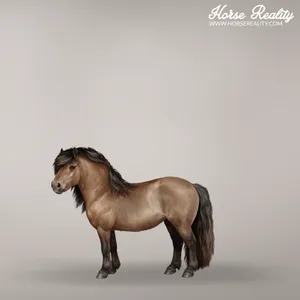
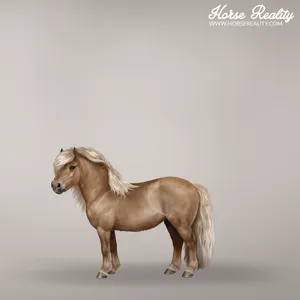
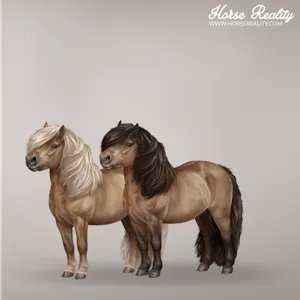
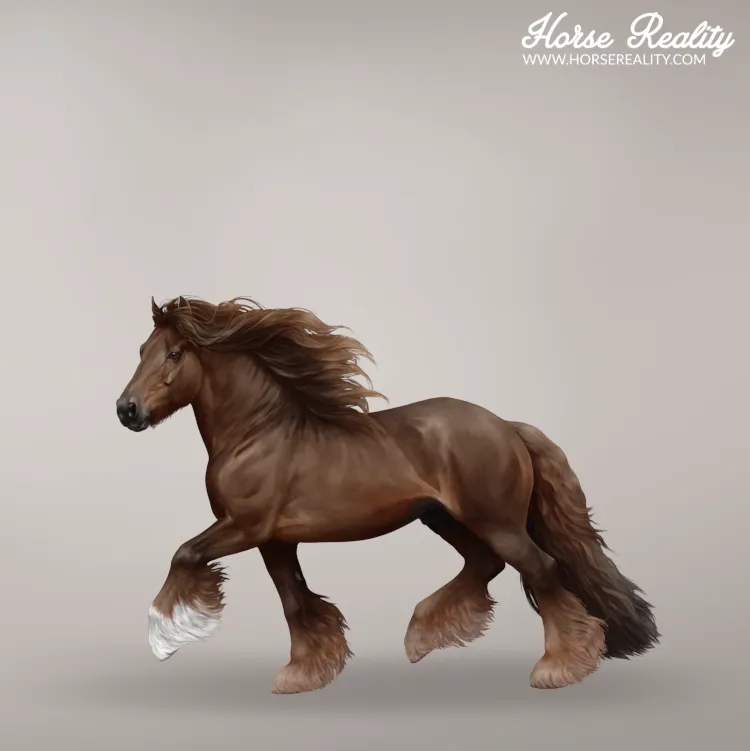
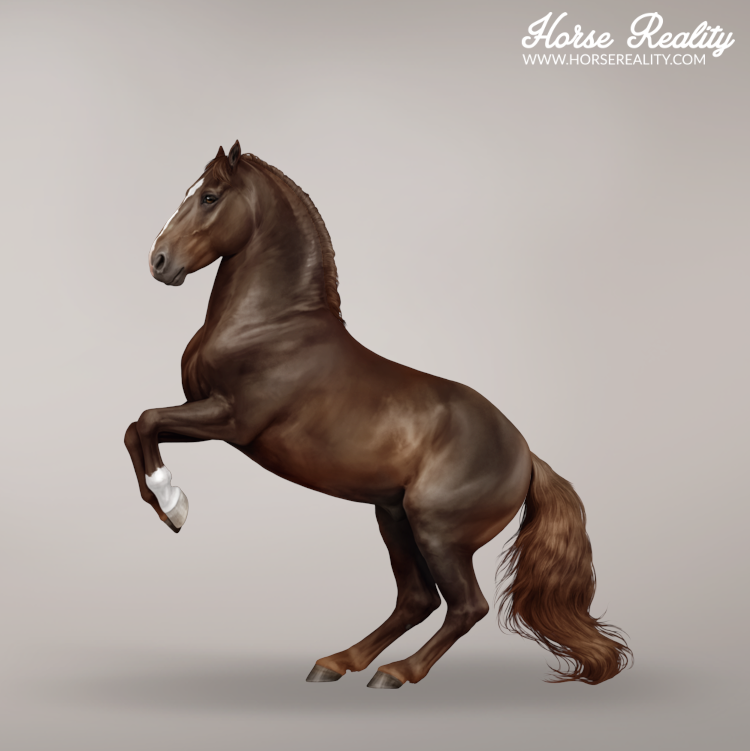
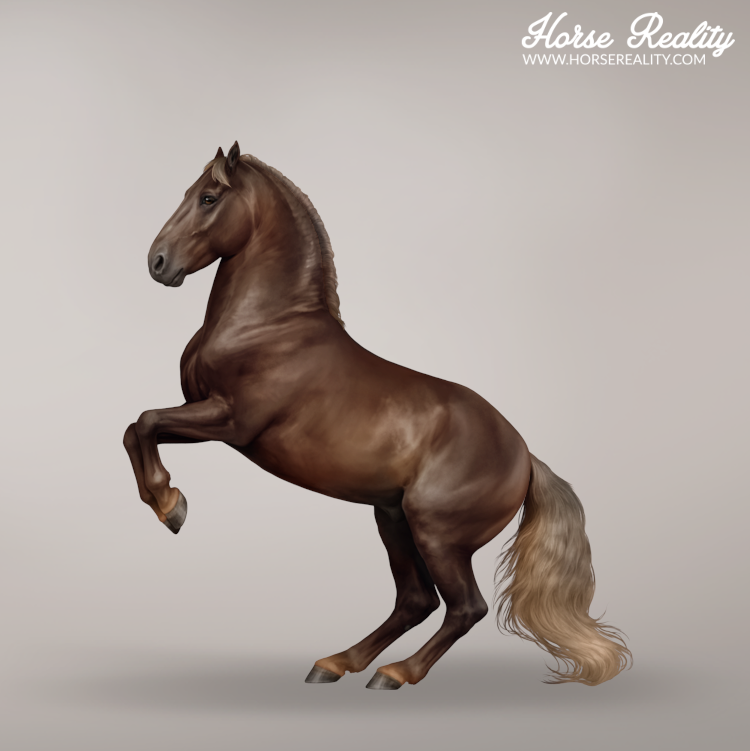
Sooty can be expressed in different ways, tends to increase as the horse ages and may show seasonal/diet changes as well. On chestnut-based horses, especially palominos, it often mostly darkens the legs or lower body. It can also darken the entire coat and cause prominent dapples. Sooty can also darken the mane and tail, sometimes making them darker than the body. |
 |
Adults |
|---|
Chestnut variations
| Sooty flaxen |
 |
|---|
Note: although sooty chestnuts can look very dark or even "black" in color, no black pigment is present - it's very concentrated red pigment!
Mimics
Dark sooty chestnuts can look like (sunfaded) black horses, flaxen sooty chestnuts can look similar to silver black, silver bay or sooty palominos.

Look at the points of the horse.
Look at the coronet bands (area right above the hooves). These should be reddish in color.
Genetics
The genetics behind sooty haven't been discovered yet.
In our game, Horse Reality, sooty is caused by the sty-allele of the hidden sooty gene. This allele acts recessive on chestnut bases, and dominant on bay bases. For any color we don't know the genetics of yet, we have to come up with something to make it work in-game. Which means working with just observations and theories. Since sooty isn't testable yet in real life, it also isn't testable in game.
Read more:
Chestnut | Sooty bay | Flaxen chestnut | Chestnut pangaré
Learn while playing! Discover how genes shape colors and patterns in our realistic horse breeding game, Horse Reality