Appearance
| Foals | 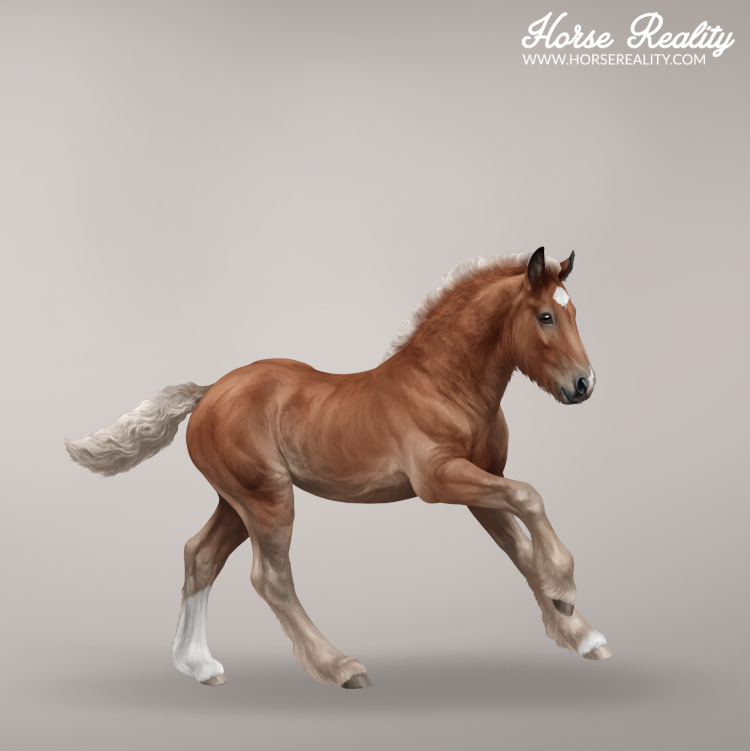 |
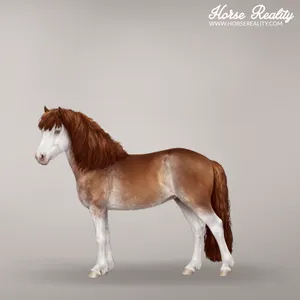
Silver bay foals are often very pale at birth, with silvery eyelashes, mane and tail. The hooves typically have vertical stripes.
|
|---|
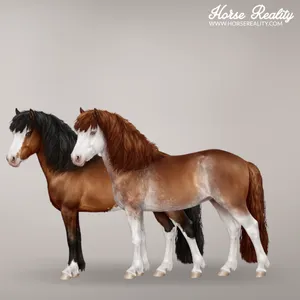
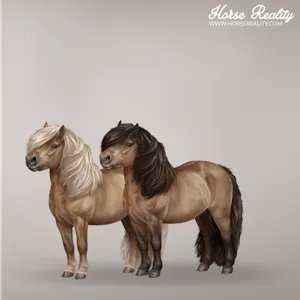
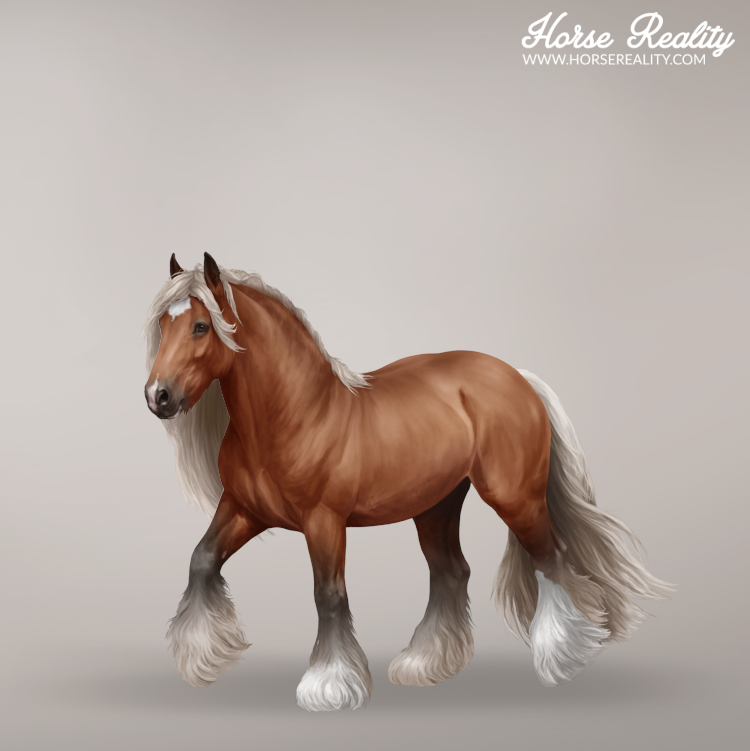
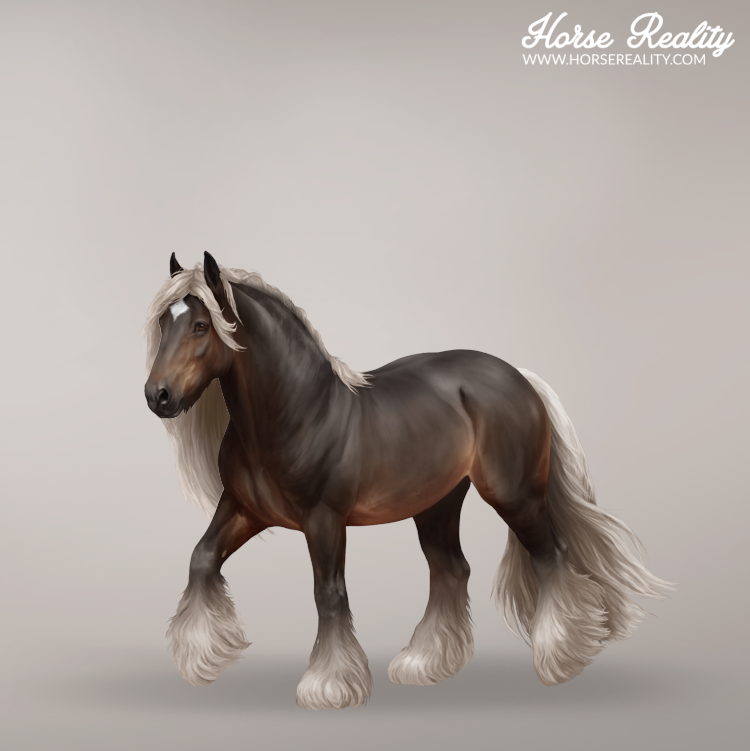
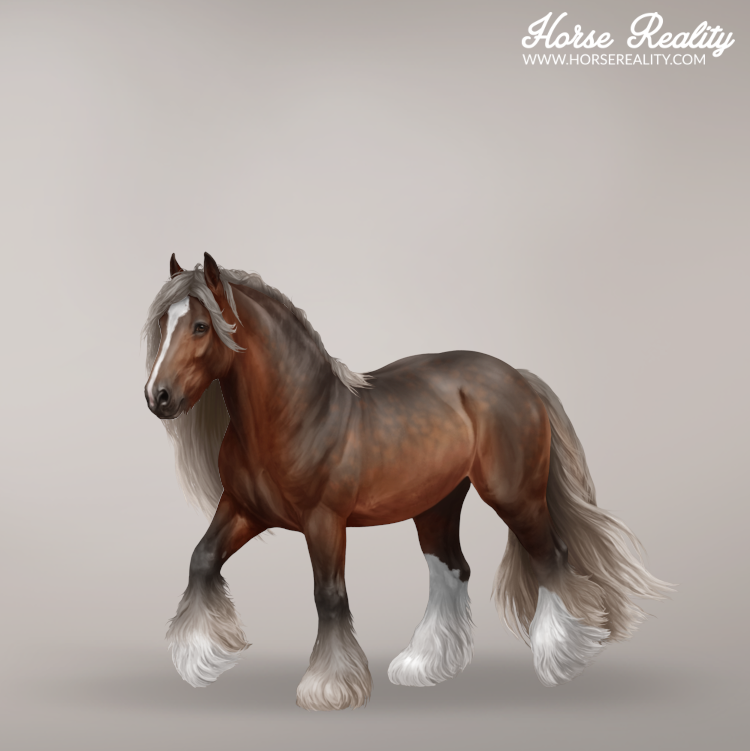
Silver on a bay base dilutes the mane, tail and sometimes feathering, eyelashes and facial hair to a reddish, silver or nearly white color. The points are usually lighter in color, and may appear brown. The coat is often dappled. Silver horses may develop eye problems (MCOA). |
 |
Adults |
|---|
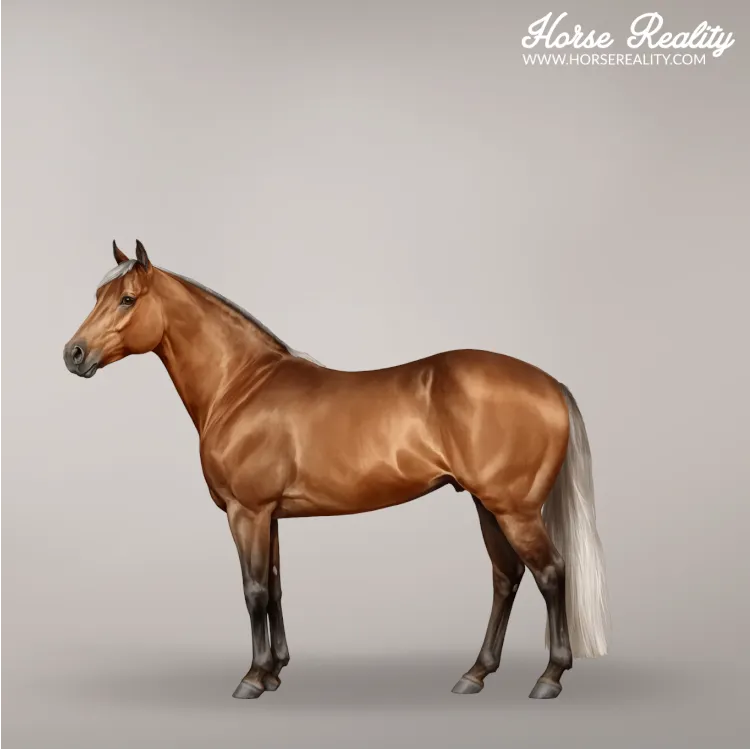
Bay shade variations
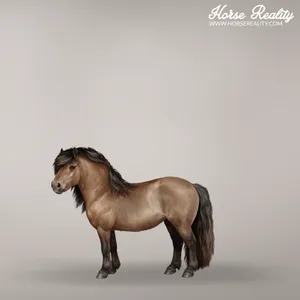
| Silver seal brown |
 |
|---|
Bay variations
| Sooty silver bay |
 |
|---|
Mimics
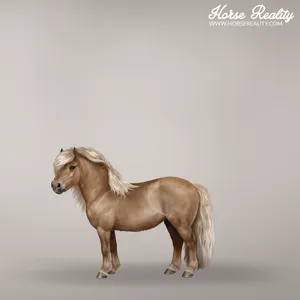
Silver bay can look similar to (flaxen) chestnuts, especially on foals, since their dark points can take a while to develop fully. Dark/sooty palominos can also be confused with silver bay. Dark (seal brown) silver bay horses can look similar to silver black horses.

Look at the points of the horse. These should be black/brown in color.
Genetics
Silver bay is the result of a bay base diluted by one of two copies of silver. The silver (Z) dilution is an allele of the PMEL17 gene.

Silver bay:
Bay (E/_ A/_) + Z/_
Read more:
Bay | Silver black
Articles
- Andersson L.S., Wilbe M., Viluma A., Cothran G., Ekesten B., Ewart S., Lindgren G.; Equine multiple congenital ocular anomalies and silver coat colour result from the pleiotropic effects of mutant PMEL; PLoS One (2013) Doi: 10.1371/journal.pone.0075639
- Brunberg E., Andersson L., Cothran G., Sandberg K., Mikko S., Lindgren G.; A missense mutation in PMEL17 is associated with the Silver coat color in the horse; BMC Genetics (2006); Doi: 10.1186/1471-2156-7-46
Learn while playing! Discover how genes shape colors and patterns in our realistic horse breeding game, Horse Reality