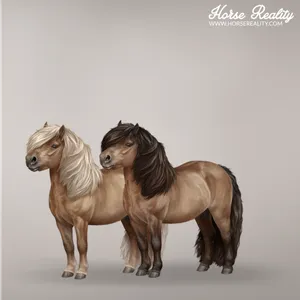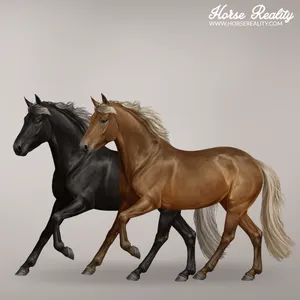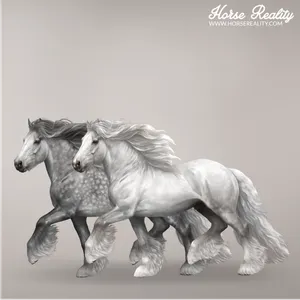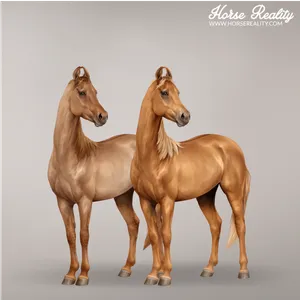
The PMEL17 gene is responsible for the silver coat color in horses, which also causes eye problems (MCOA).
Alleles
There are two currently known alleles.
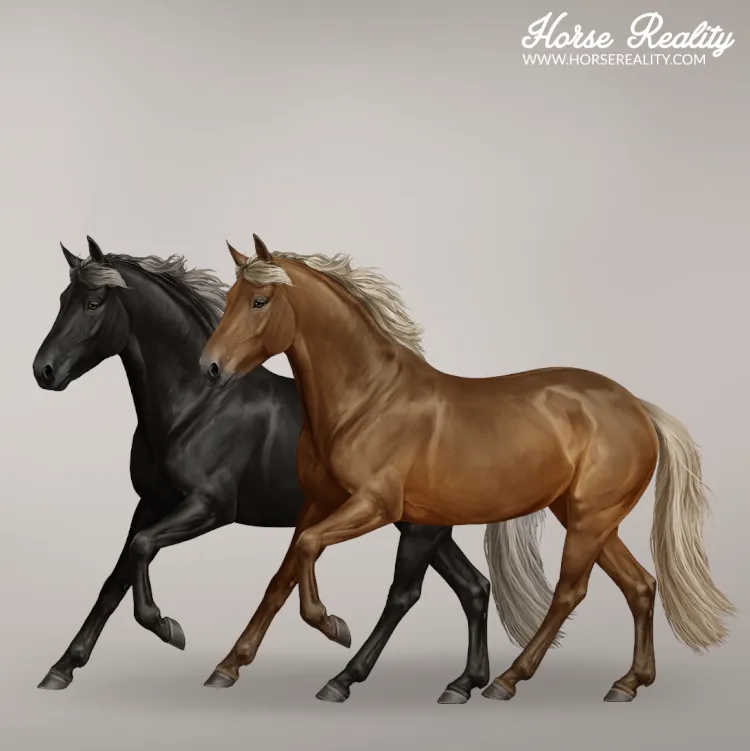
The dominant Z-allele (silver) dilutes black pigment of the mane, tail and other long hairs to a silver to nearly white color.
The recessive z-allele leads to a regular coat color without dilution.
| PMEL17 | Color |
| Silver black, silver bay | |
| Silver black, silver bay | |
| No dilution |
Mechanism
Pigment cells, called melanocytes, produce the pigments in the hair and skin of horses. The production of pigments can be influenced at different stages, changing the type (black or red) or the amount (dilutions/ white patterns) of pigment that is made.

The production of black and red pigment involves several different steps. Some of these steps are shared between the two, and some are unique to each pigment type. This is why certain genes will affect all base colors, while others only affect either red or black pigment: they affect different steps.
PMEL17
The PMEL17 gene codes for the protein PMEL17 (pre-melanosomal protein 17). PMEL17 is involved in the production of black pigment and may have other roles during development as well.
Changes in the PMEL17 gene can, therefore, affect pigmentation and lead to diluted coat colors. In horses with the Z-allele, the production of black pigment is inhibited.
| Alleles | Mutation | Effect |
| Missense mutation | Diluted black pigment, eye problems |
|
| / | No dilution |
The Z-allele is also associated with eye problems (MCOA).
MCOA
MCOA, or Multiple Congenital Ocular Anomalies, are several eye abnormalities associated with the silver horse color. Horses with one copy of silver have less severe signs, typically in the form of cysts. Horses with two copies of silver are more severely affected and can have cysts and additional abnormalities. This can impact their vision and even lead to blindness. Therefore, breeding two silver horses together should be avoided if possible.
Importantly, even though chestnut horses don't visibly show the silver color, they can still be affected by these eye problems and pass them on if they carry the silver allele!
Colors
 Hannelore Roodhooft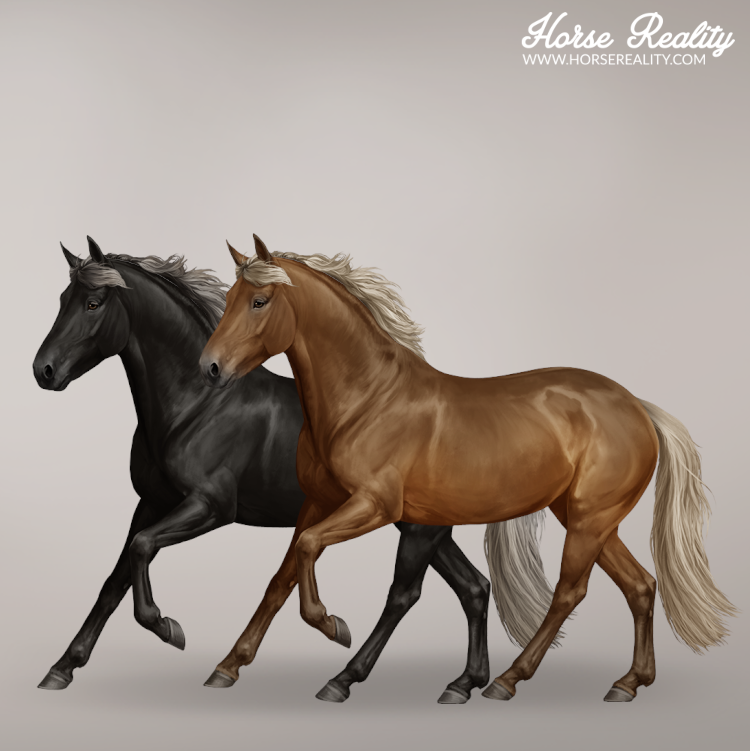
Read more:
Color genes | MATP gene
Articles
- Andersson L.S., Wilbe M., Viluma A., Cothran G., Ekesten B., Ewart S., Lindgren G.; Equine multiple congenital ocular anomalies and silver coat colour result from the pleiotropic effects of mutant PMEL; PLoS One (2013) Doi: 10.1371/journal.pone.0075639
- Brunberg E., Andersson L., Cothran G., Sandberg K., Mikko S., Lindgren G.; A missense mutation in PMEL17 is associated with the Silver coat color in the horse; BMC Genetics (2006); Doi: 10.1186/1471-2156-7-46