Horses come in a variety of coat colors, shades and white patterns. This all starts with the base coat color, controlled by two genes that regulate the producion of black and/ or red pigment. Several other genes can then dilute, modify or remove pigment, creating the final color. Our color genetics guide will explore all these genes one by one, starting with the base coat colors.
Base Colors
Horses can have three base coat colors: black, bay or chestnut.
Black
Black is one of the base colours in horses, next to chestnut and bay. It is characterised by a fully black coat.
 Hannelore Roodhooft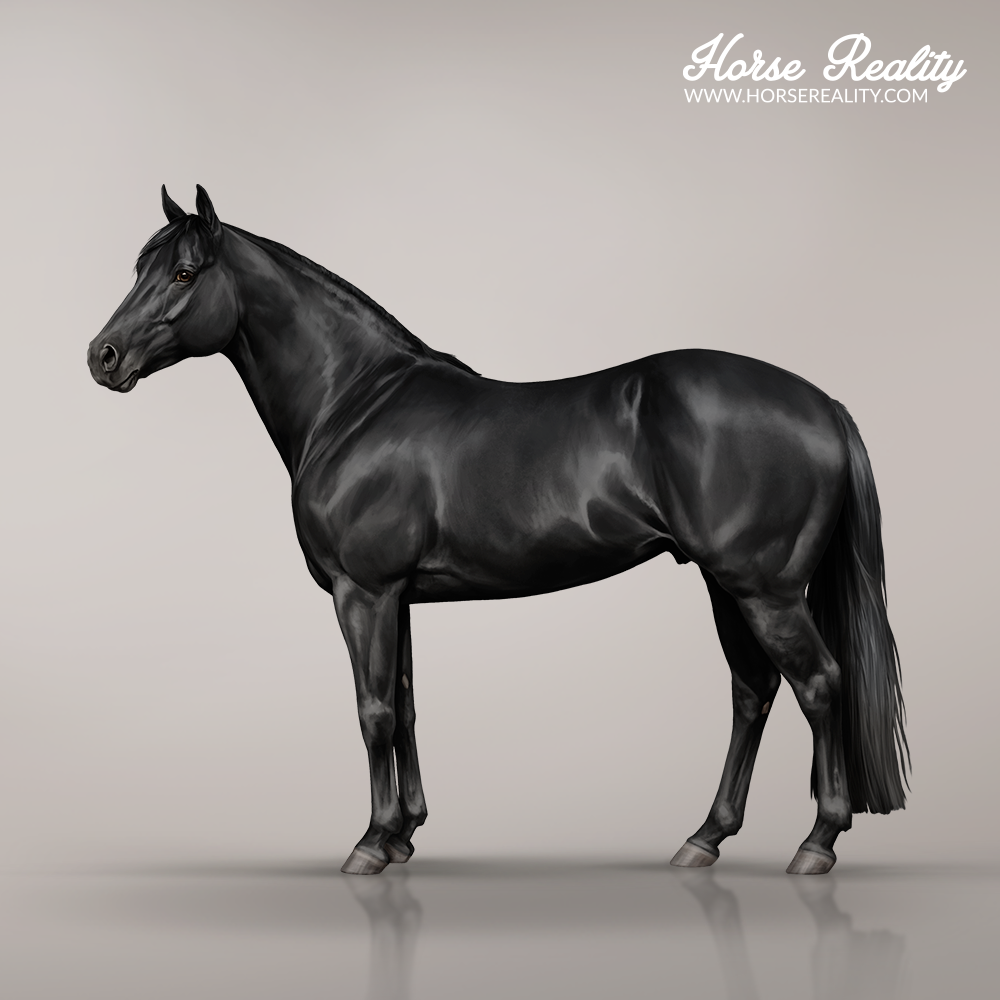
Bay
Bay is one of the base coat colours in horses, next to chestnut and black. It is characterised by a red coat with black points.
 Hannelore Roodhooft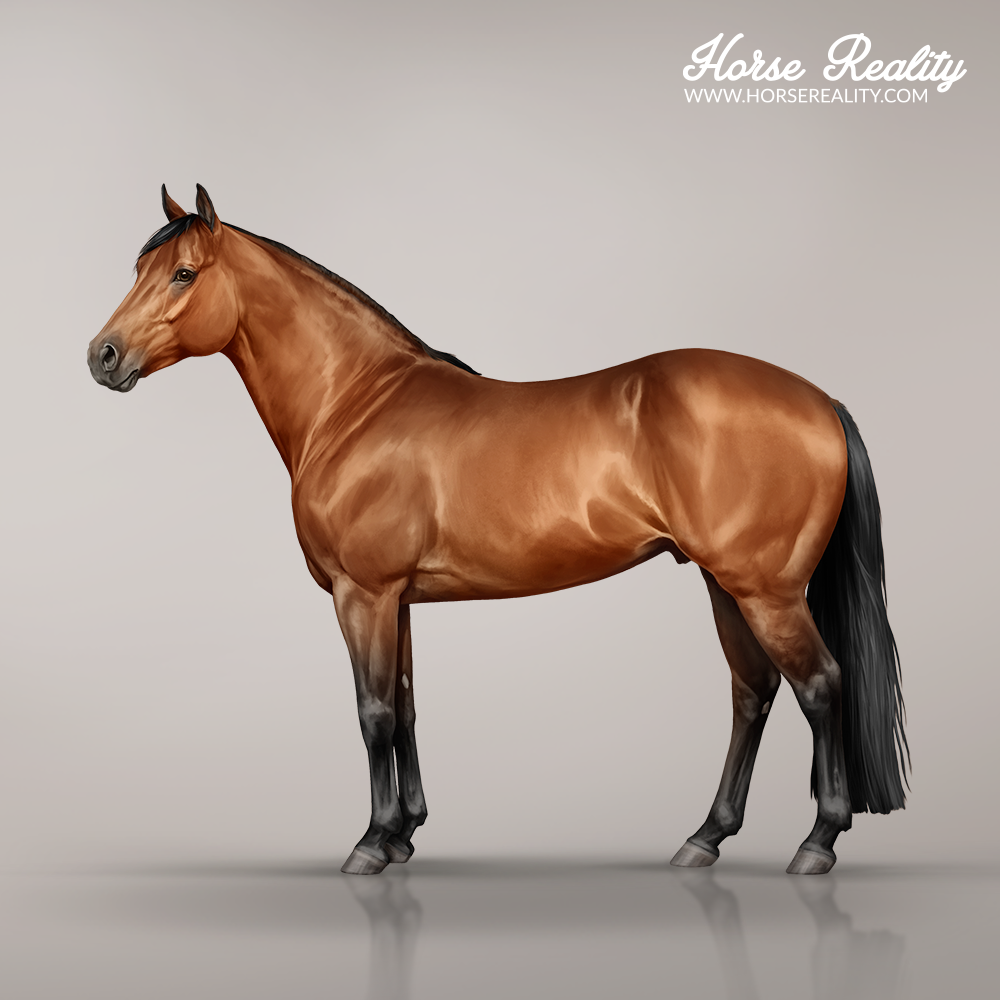
Chestnut
Chestnut is one of the base coat colours in horses, next to black and bay. It is characterised by a fully red coat.
 Hannelore Roodhooft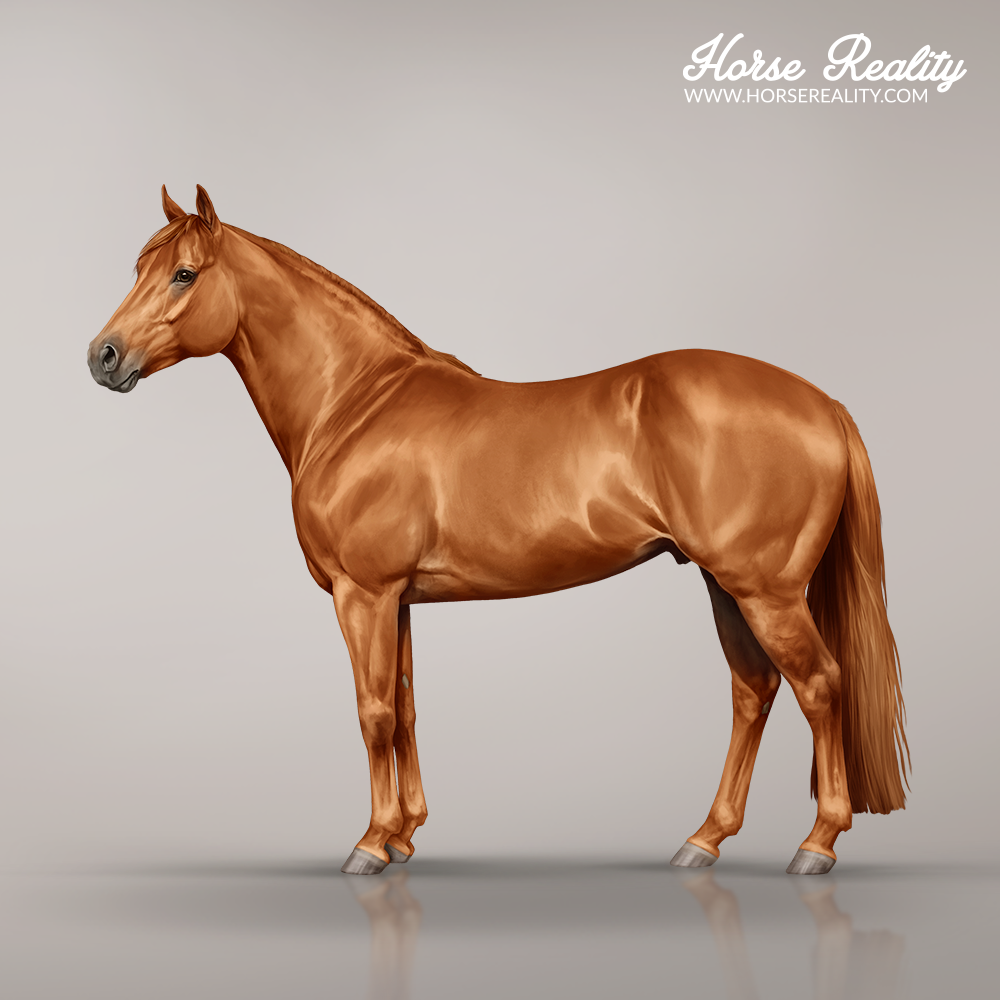
The base colours are controlled by 2 genes: extension and agouti
Extension gene
The extension gene controls the production of black and red pigment. It is one of the genes that determines the base color of horses.
 Hannelore Roodhooft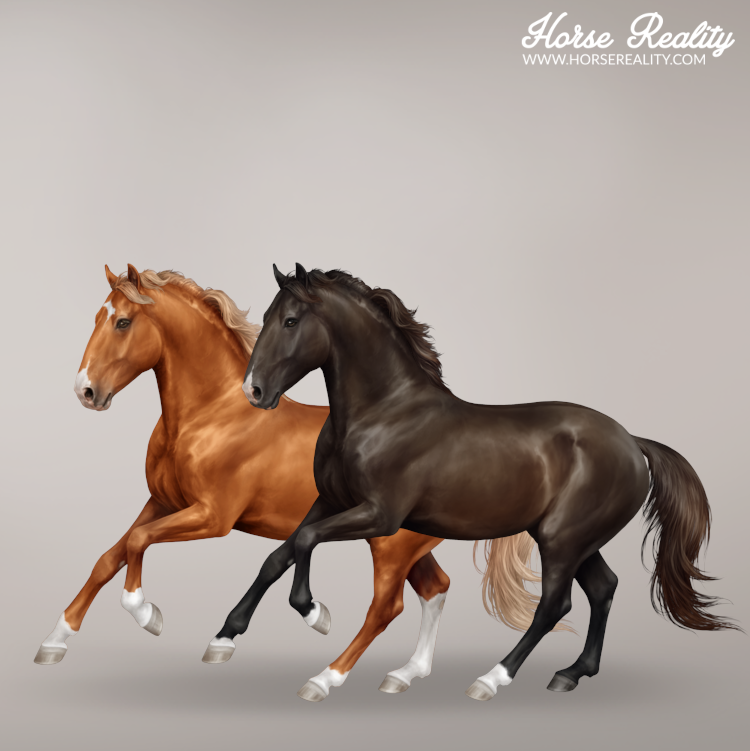
Agouti gene
The agouti gene controls the distribution of black on the coat. It is one of the genes that determines the base color of horses.
 Hannelore Roodhooft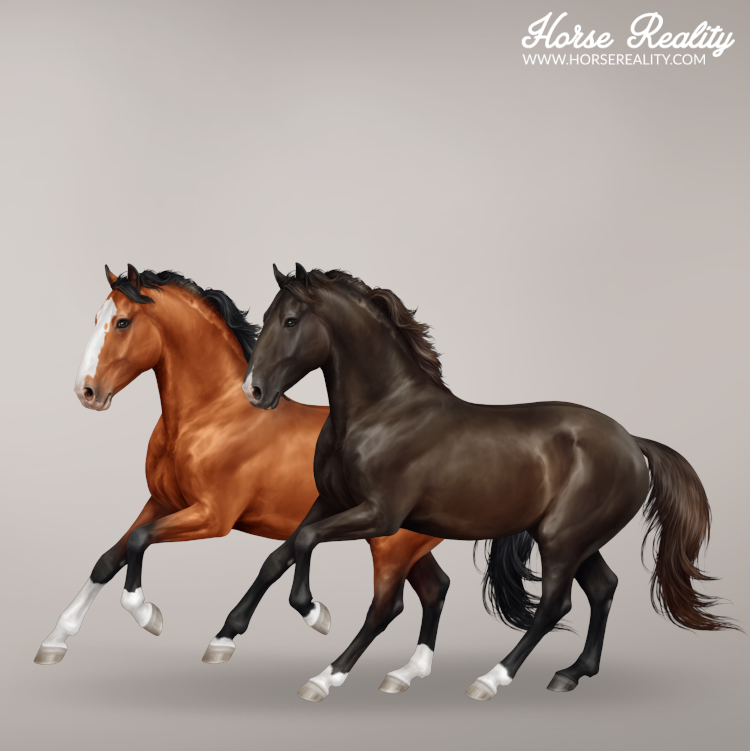
Modifiers
Grey
Grey
Grey (or gray) is a horse color caused by one or two copies of grey on any coat color. It causes progressive lightening (“greying”) of the coat.
 Hannelore Roodhooft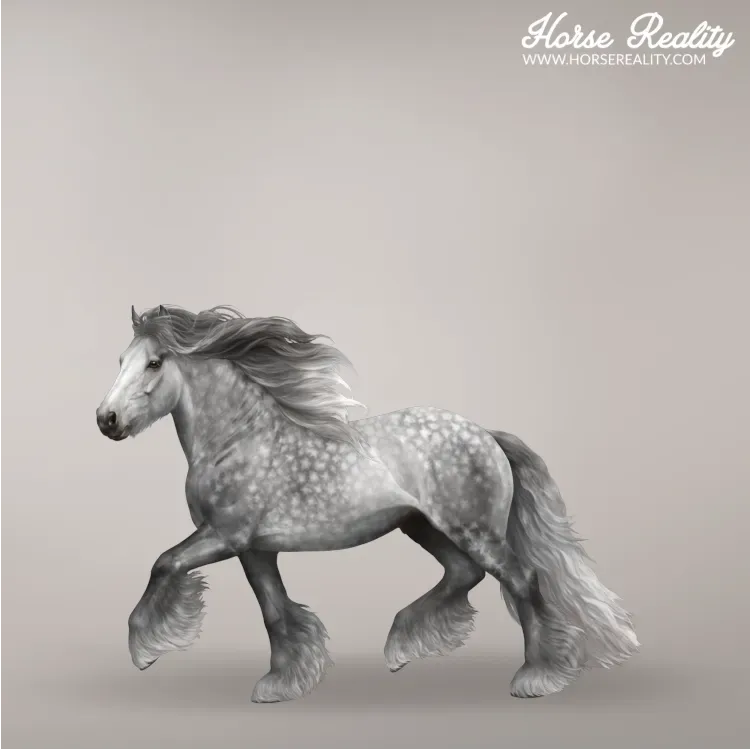
Grey is caused by the STX17 gene
STX17 gene
The STX17 gene is responsible for the color grey in horses.
 Hannelore Roodhooft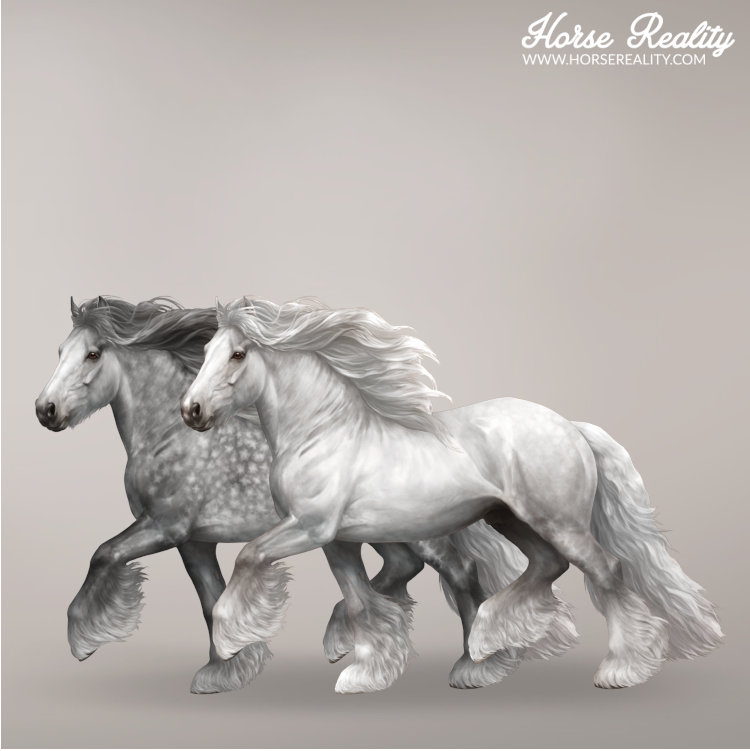
Flaxen
Flaxen
Flaxen is a coat color modifier that lightens the mane and tail of chestnut horses.
 Hannelore Roodhooft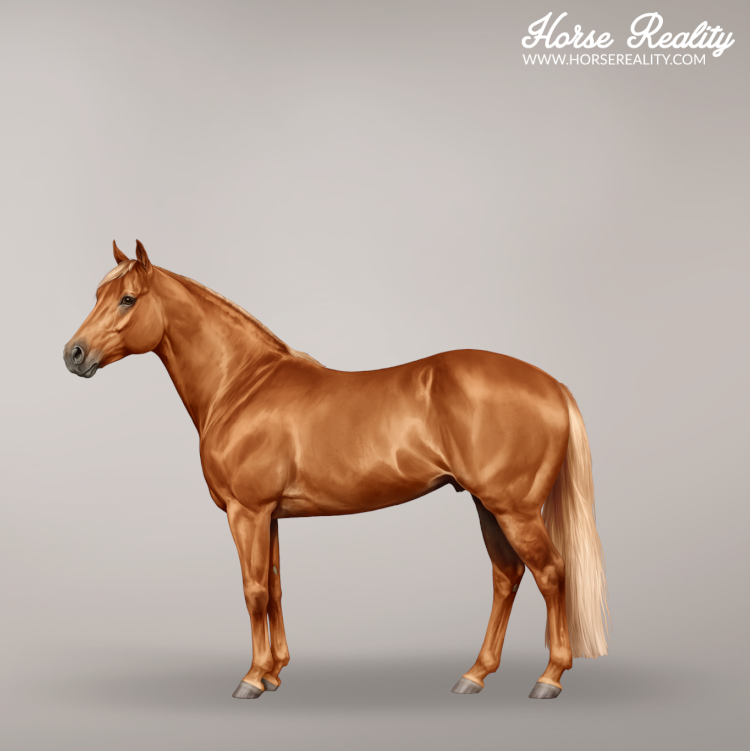
Sooty
Sooty
Sooty or smutty is a coat color modifier that darkens the coat of chestnut and bay-based horses. Foal are born with a “normal” coat color, and graudally darken as they age.
 Hannelore Roodhooft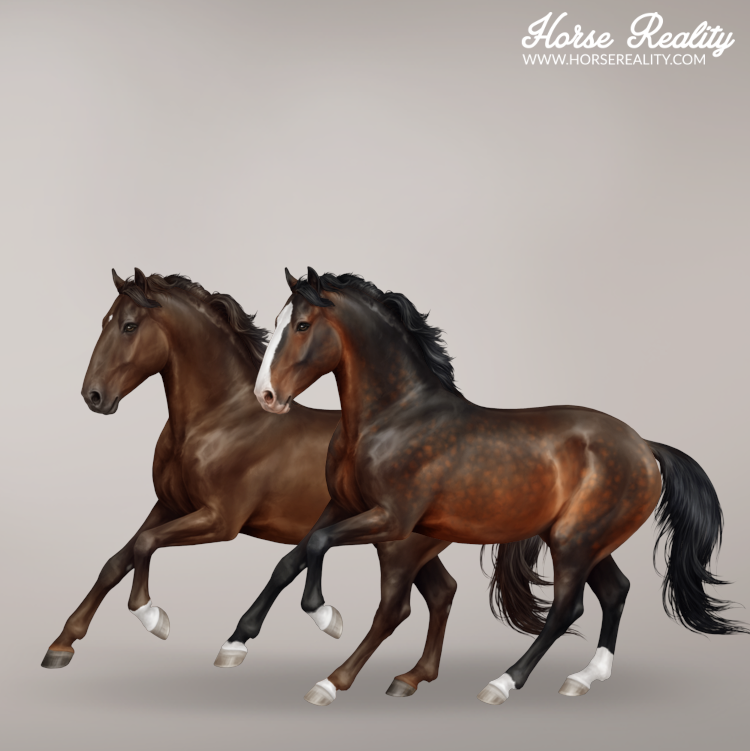
Pangaré
Pangaré
Pangaré, also called or mealy, is a coat color modifier that lightens the soft body parts of chestnut and bay-based horses.
 Hannelore Roodhooft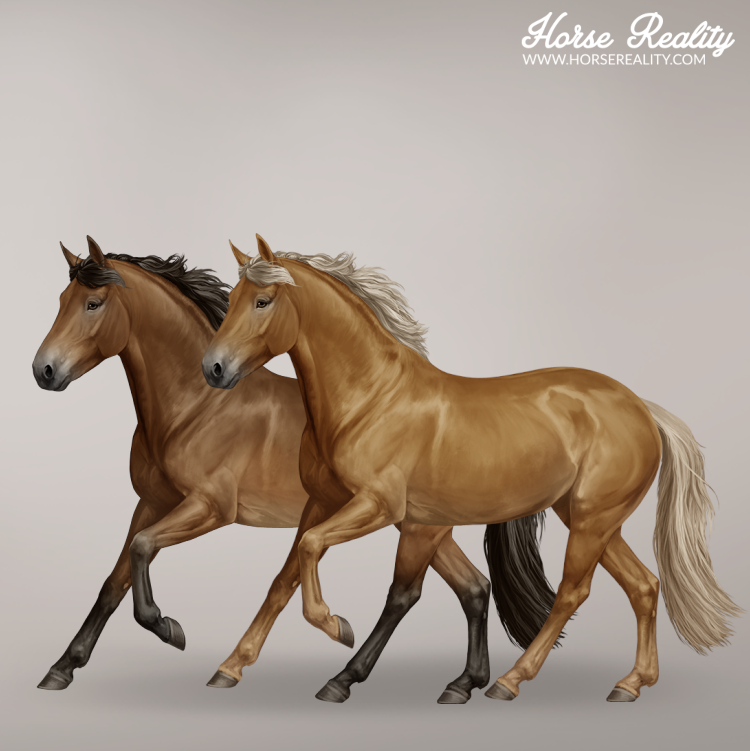
Dilutions
Dilutions lighten the base coat of horses.
Cream, pearl, sunshine & snowdrop
Cream
Cream is a dilution, located on the same gene as pearl. It lightens the base coat of horses and leads to the colors palomino, buckskin, smoky black, cremello, perlino
and smoky cream
 Hannelore Roodhooft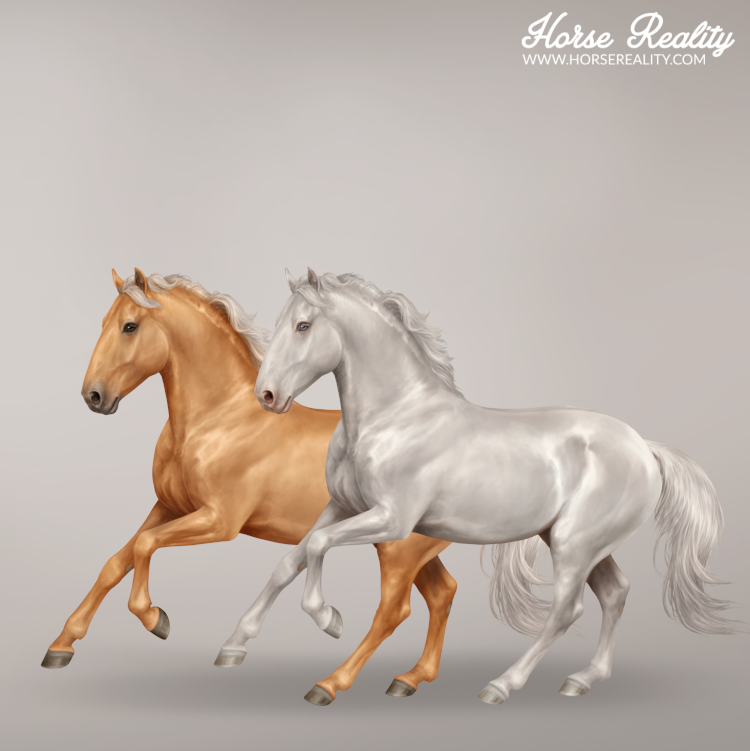
Pearl
Pearl is a dilution, located on the same gene as cream, sunshine and snowdrop. It lightens the base coat of horses and creates the colors chestnut pearl, black pearl and bay pearl.
 Hannelore Roodhooft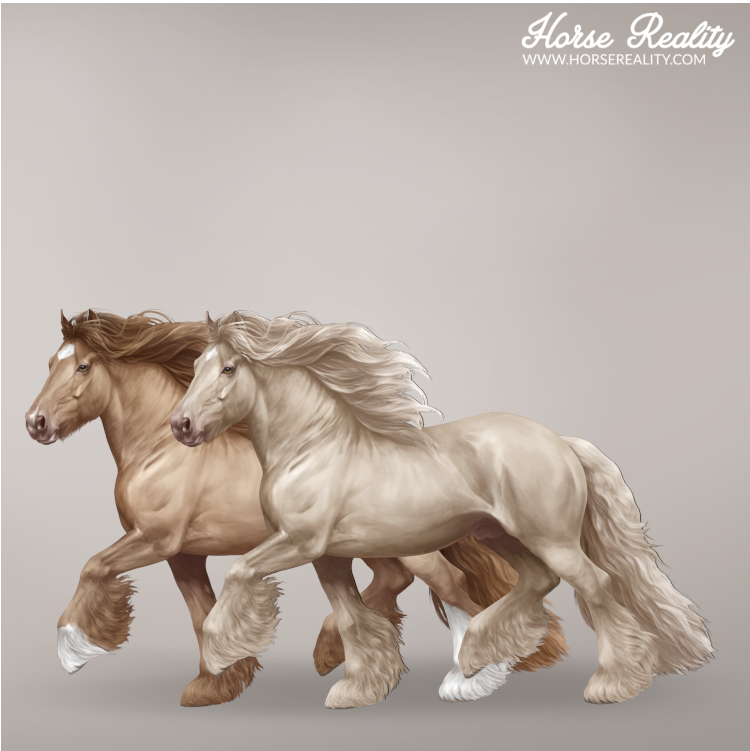
Sunshine
Sunshine is a dilution, located on the same gene as cream, pearl and snowdrop. It lightens the base coat of horses when combined with cream.
 Hannelore Roodhooft
Snowdrop
Snowdrop is a dilution, located on the same gene as cream, pearl and sunshine. It lightens the base coat of horses.
 Hannelore Roodhooft
Cream, pearl, sunshine and snowdrop are all located on the MATP gene.
MATP gene
The MATP gene is responsible for the dilutions cream, pearl, sunshine and snowdrop in horses.
 Hannelore Roodhooft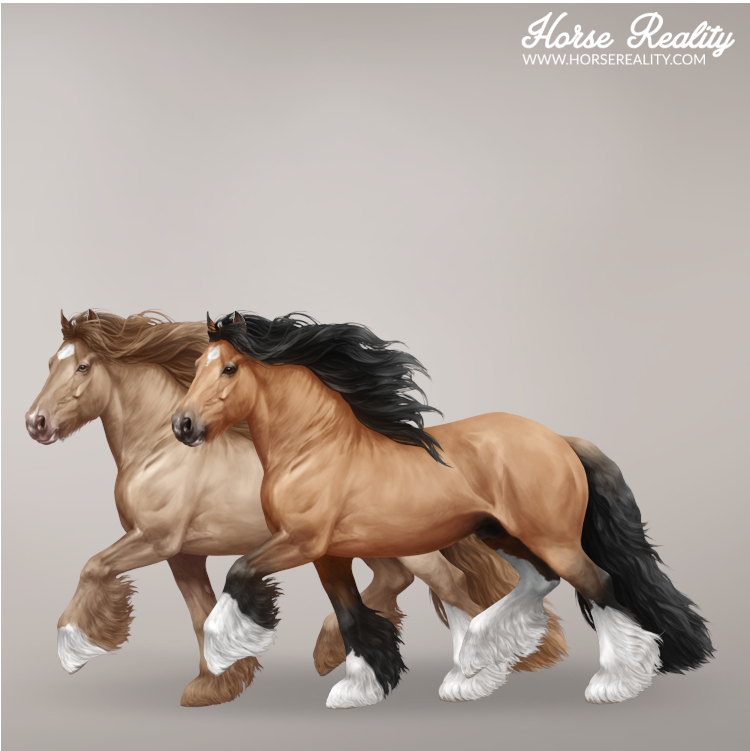
Dun and non-dun1
Dun
Dun is a dilution, located on the same gene as non-dun1. It lightens the base coat of horses and causes primitive markings. It leads to the colors chestnut dun, black dun and bay dun.
 Hannelore Roodhooft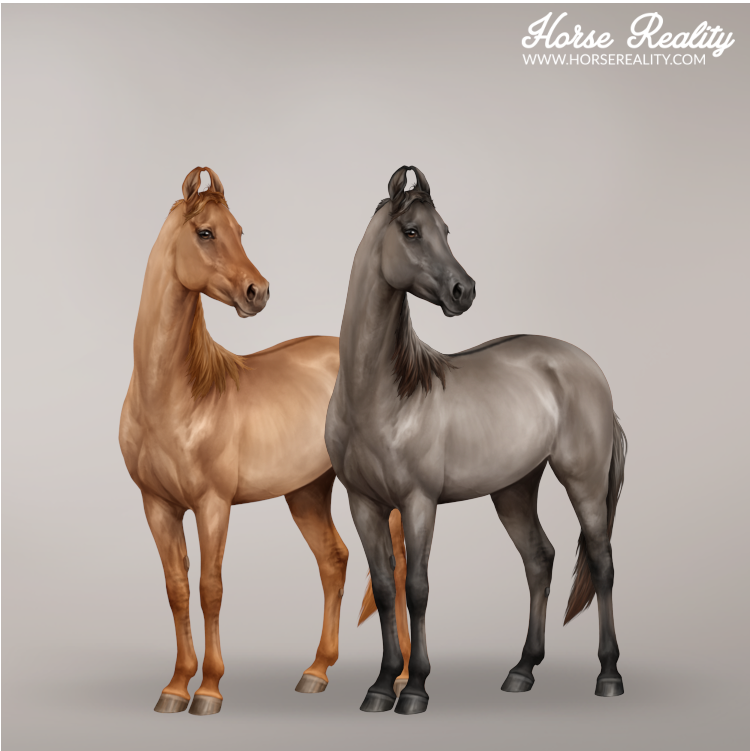
Non-dun1
Non-dun1 is located on the same gene as dun. It causes primitive markings. It leads to the colors chestnut nd1, black nd1 and bay nd1.
 Hannelore Roodhooft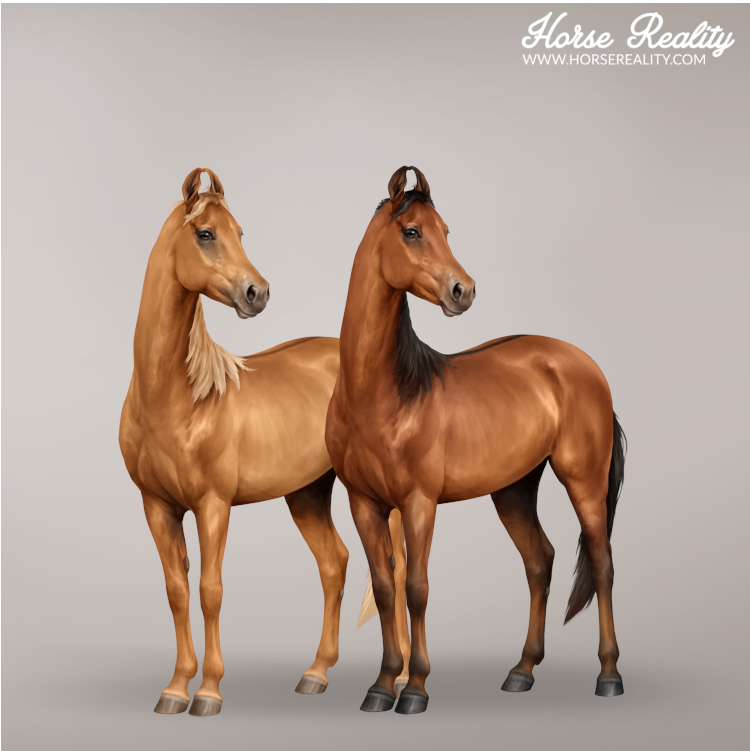
Dun and non-dun1 are located on the TBX3 gene.
TBX3 gene
The TBX3 gene is responsible for the dilution dun and non-dun1.
 Hannelore Roodhooft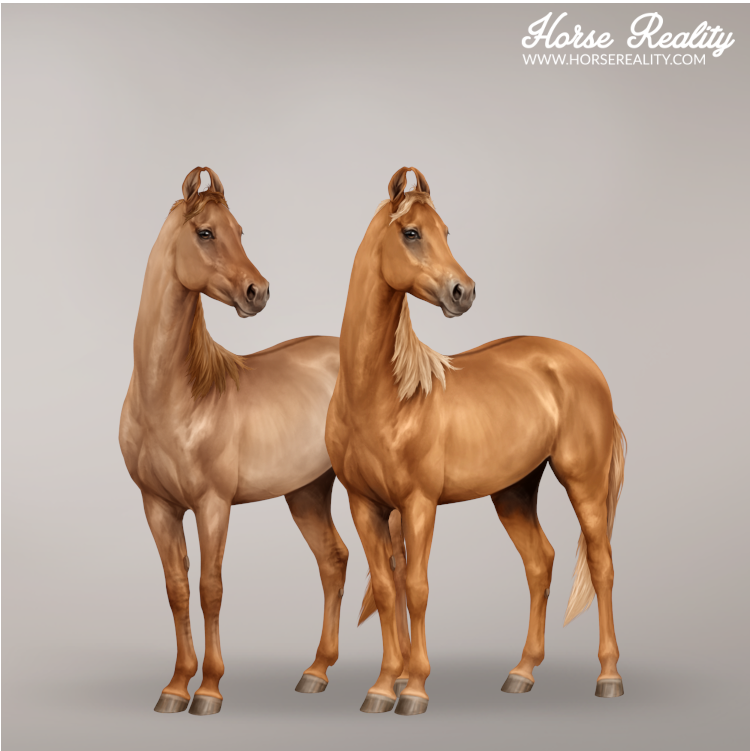
Silver
Silver
Silver, also called silver dapple or taffy, is a dilution that lightens the mane and tail of black and bay-based horses to a nearly white color.
 Hannelore Roodhooft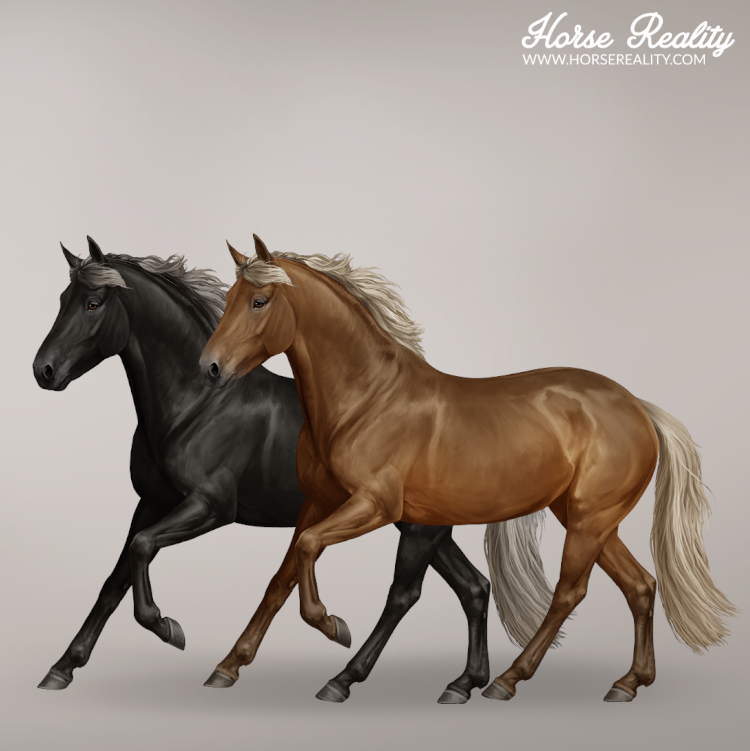
Silver is located on the PMEL17 gene
PMEL17 gene
The PMEL gene is responsible for the color silver in horses.
 Hannelore Roodhooft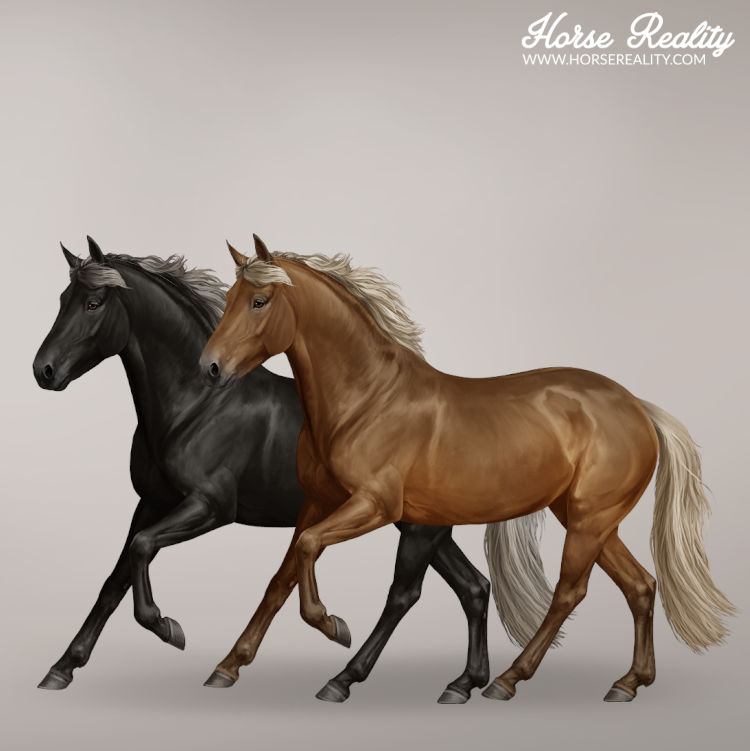
Mushroom
Mushroom
Mushroom is a coat color modifier that lightens the coat of chestnut and bay-based horses to a distinctive “sepia” toned coat.
 Hannelore Roodhooft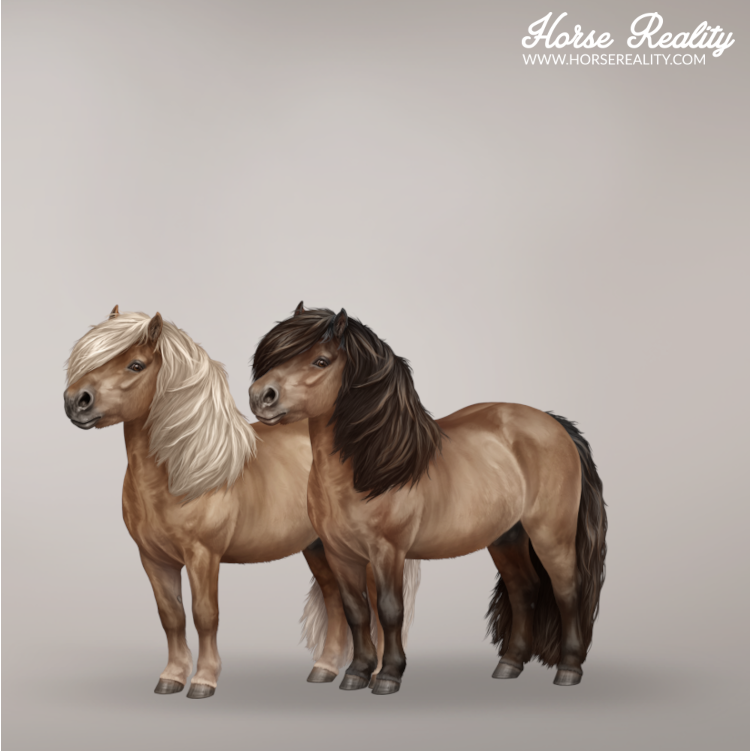
Mushroom is located on the MFSD12 gene
MFSD12 gene
The MFSD12 gene is responsible for the color mushroom in horses.
 Hannelore Roodhooft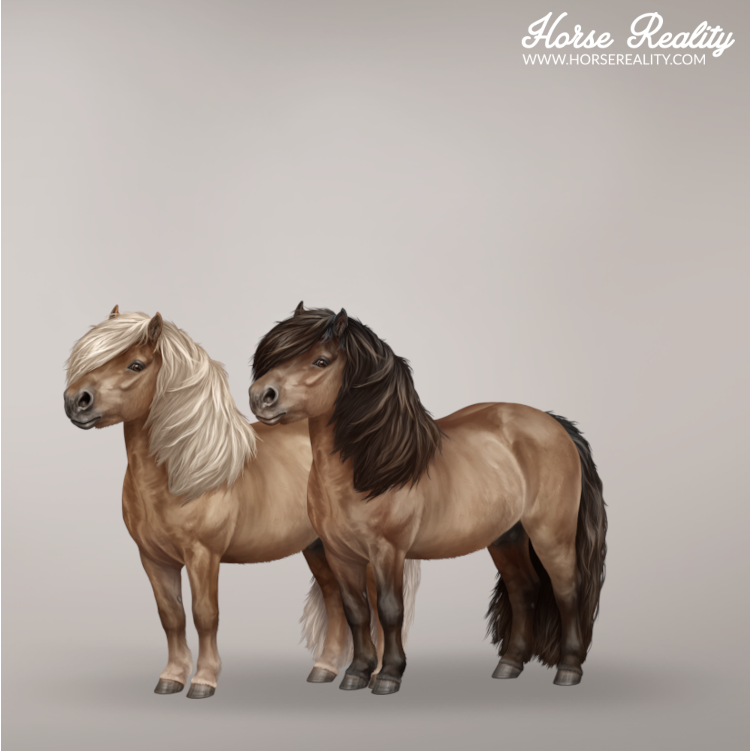
Champagne
- Gold champagne
- Amber champagne
- Wild amber champagne
- Sable champagne
- Classic champagne
White Patterns
Frame Overo
Leopard Complex (appaloosa)
Splashed White
KIT patterns
- Tobiano
- Sabino 1
- Roan
- White Spotting (old name: "dominant white")