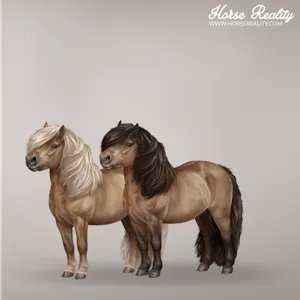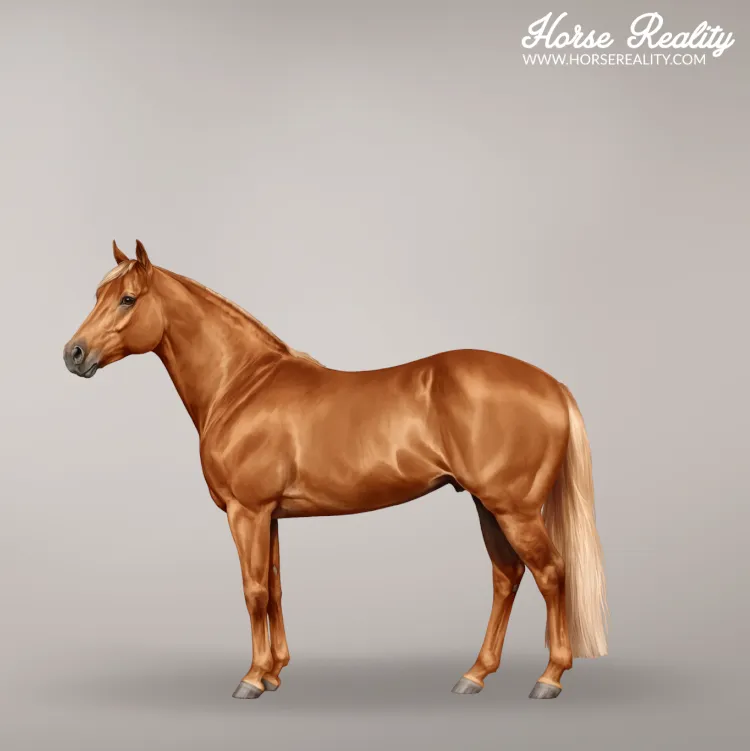
Appearance
| Foals | 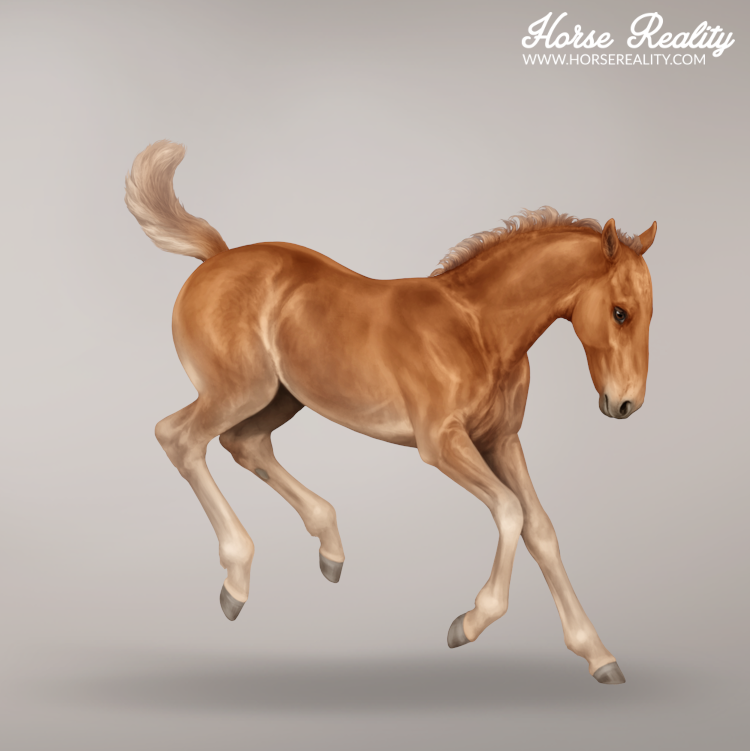 |
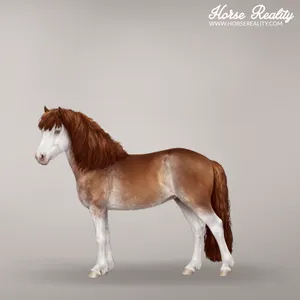
Some foals clearly show flaxen when they are young, while others only develop a lighter mane and tail after their first sheds. |
|---|
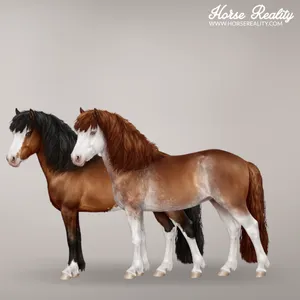
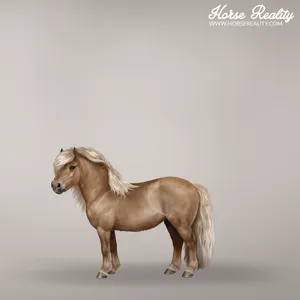
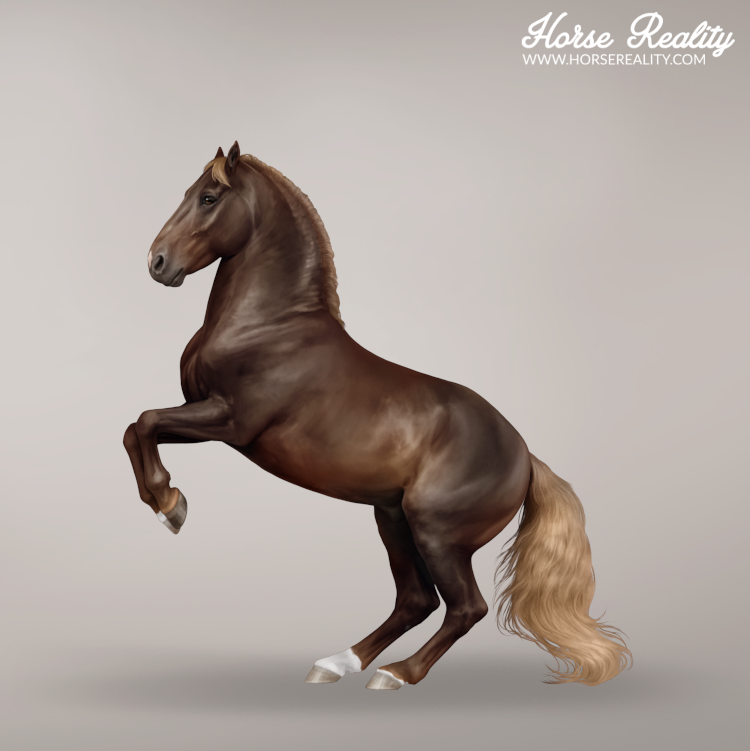
Mane, tail and feathering of chestnut based horses is lightened to a yellow to nearly white color. |
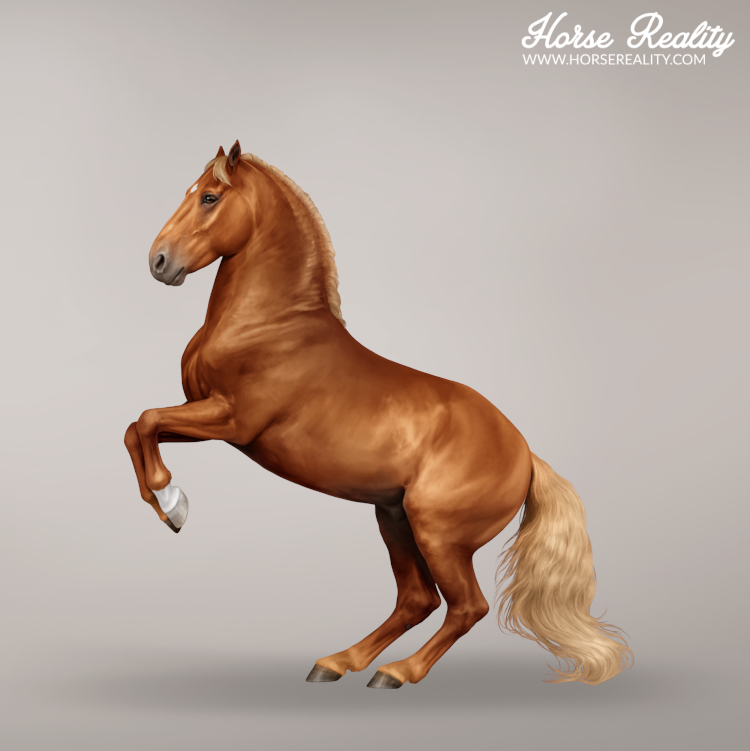 |
Adults |
|---|
Chestnut variations
| Sooty flaxen |
 |
|---|
Mimics
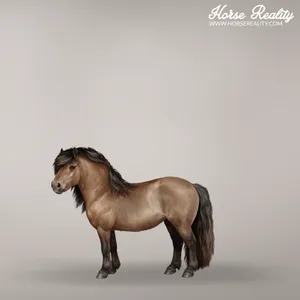
Flaxen chestnuts may sometimes look similar to silver black or silver bay horses. They could also be confused with palomino or gold champagne, since these cause a lighter mane and tail as well.
Flaxen chestnut foals can be hard to distinguish from regular chestnut foals, because of foal camo.

Look at the points of the horse. These should be reddish in color.
Look at the coronet bands (area right above the hooves). These should be reddish in color.
Coat and eye color are not diluted.
Genetics
The genetics behind flaxen haven't been discovered yet. It is suspected to be a recessive, possibly even polygenic (multiple genes) trait.
In our game, Horse Reality, flaxen is caused by the recessive f-allele of the hidden flaxen gene. For any color we don't know the genetics of yet, we have to come up with something to make it work in-game. Which means working with just observations and theories. Since flaxen isn't testable yet in real life, it also isn't testable in game.
Presence in horses
Flaxen is widespread among horses, appearing in most horse breeds. In some breeds, such as the Haflinger Horse, all horses are exclusively flaxen chestnuts.
Read more:
Chestnut | Sooty chestnut | Chestnut pangaré
Learn while playing! Discover how genes shape colors and patterns in our realistic horse breeding game, Horse Reality