About dun
Dun is thought to be the wild-type or "original" color of horses and is also found in other equines such as Przewalski horses, zebras, and asses (donkeys). Because of this, dun is believed to have an important role in camouflage.
The gene responsible for dun is TBX3. There are three known alleles of this gene: D (dun), nd1 (non-dun1) and nd2 (non-dun2).
| Alleles | Effect |
| Dun: diluted coat and primitive markings | |
| Primitive markings | |
| No dilution or primitive markings |
The dun allele (D) is dominant, so any horse that is D/_ will be dun. Most domestic horses nowadays are nd2 or nd1, even though these are technically mutations!

When we write, for example, "D/_", this means the "_" could be any allele: D/D, D/nd1 or D/nd2.
The D-allele leads to a "normal" TBX3 gene. In the areas where TBX3 is active, it dilutes the coat. It causes only one side of the hairshaft to have pigment in it, making it look lighter as a result.
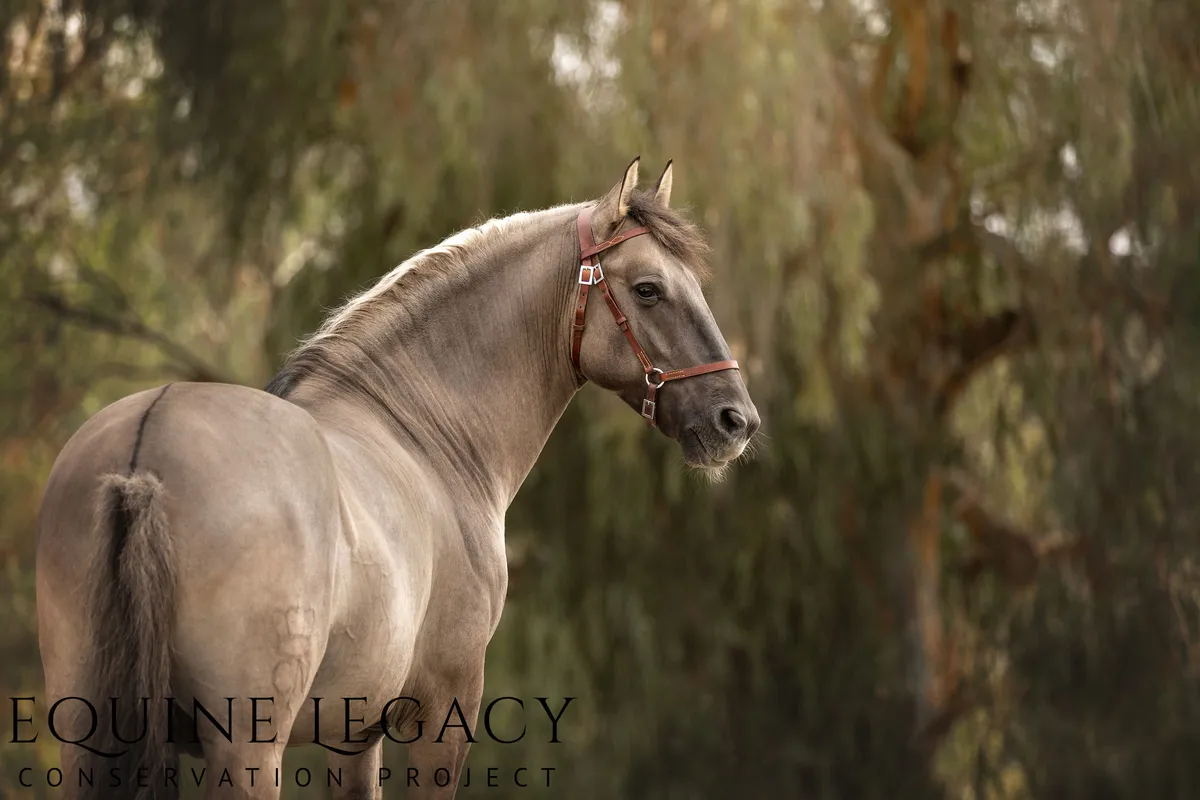
The head, lower legs, mane, and tail stay mostly undiluted. Dun also causes "primitive markings", a group of dark coat markings. TBX3 is not expressed in these dark and undiluted areas, which is why they aren't lightened like the rest of the coat. Another possible dun characteristic is "frosting" in the mane and/or tail.
In this post, we'll go over the different dun characteristics, like all the possible primitive markings and frosting, and highlight them with real-life examples. Keep in mind that horses may not have all of the characteristics at the same time, and the degree to which they are expressed can also differ between horses.
You can read the full Equinecolors dun article here.
Primitive markings
| Dorsal stripe |
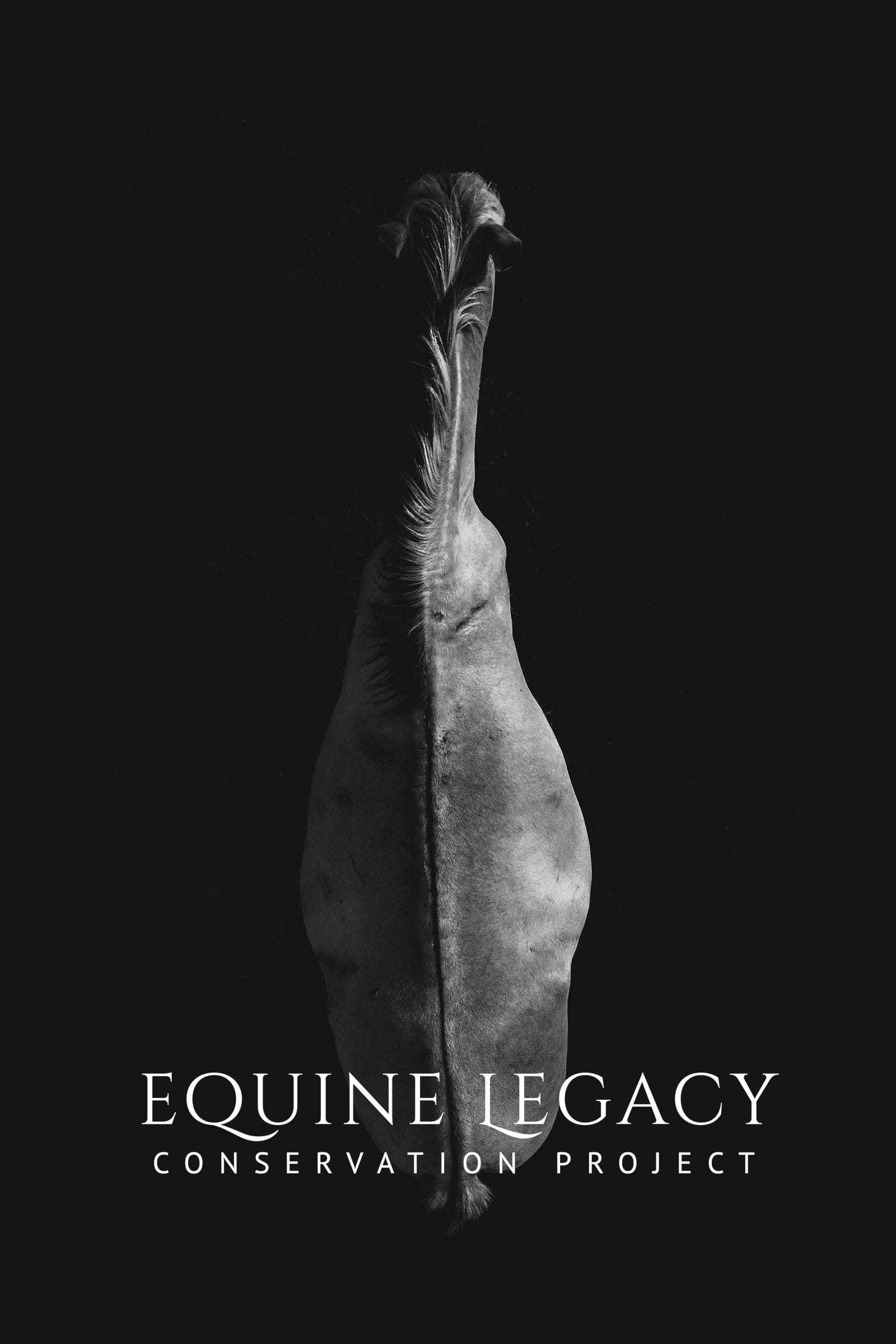
Sorraia horse, Portugal @Equine legacy Project1 |
The most defining and visible dun marking. It is always present, but can be hidden by e.g. white patterns.
the mane, over the spine, all the way through the tail. Because of this, mane/ tail will have a dark centre; think of the typical Fjord mane. The width of the stripe can vary, and some dorsal stripes also have fishgrate-like lines extending out from them. |
|---|
| Shoulder stripes |
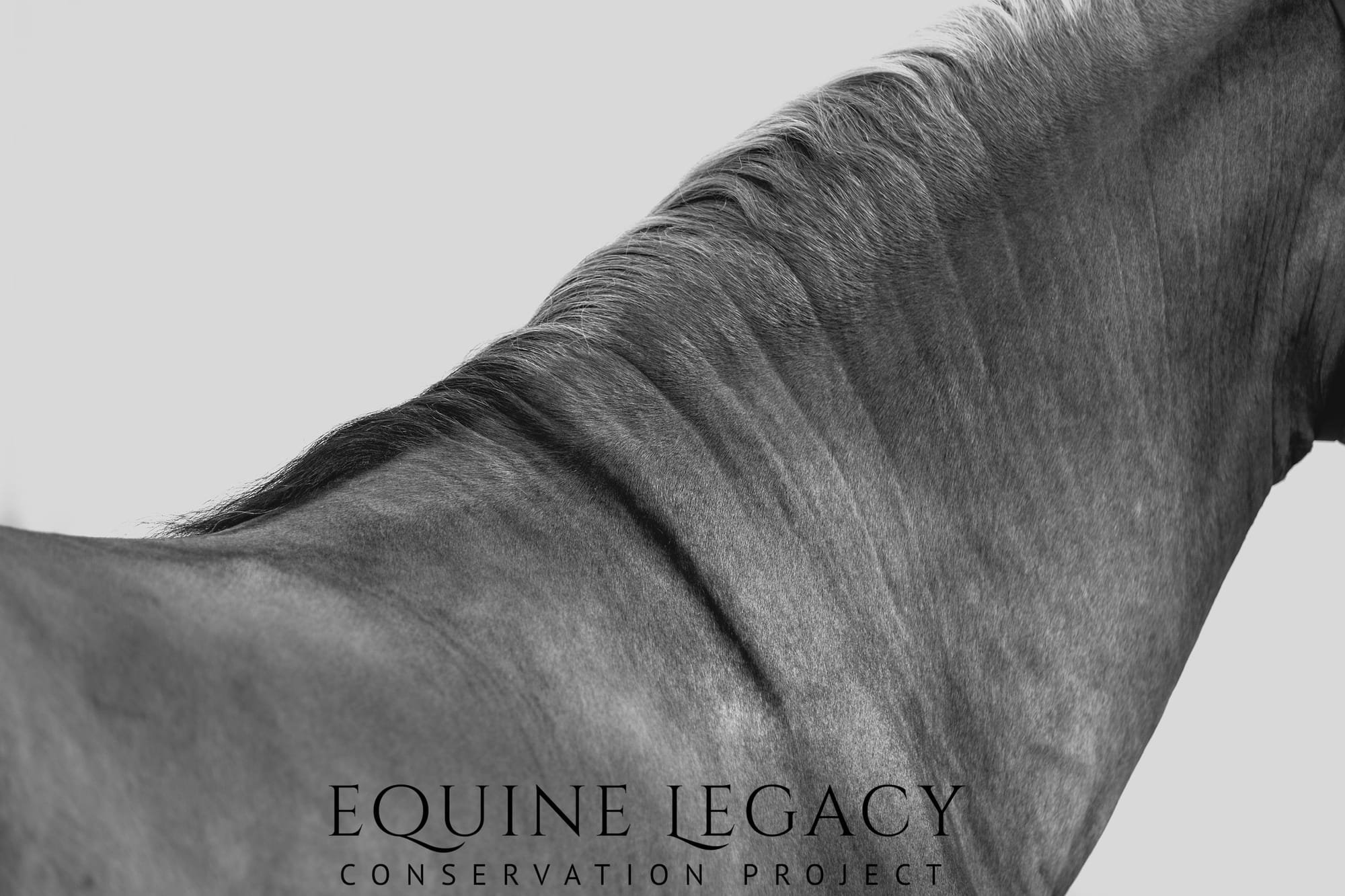
Sorraia horse, Portugal @Equine legacy Project1 |
A diagonal stripe on the shoulder area. It can vary from a light shadow or smudge on the withers to multiple stripes up to the neck. |
|---|
| Bider markings |
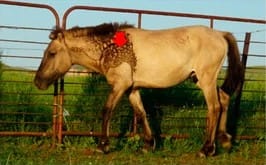
Adapted from Smith et al., Animals (2026), CC BY 4.0.2 |
Unique, cobweb-like dark patchy areas on the shoulder, present in breeds like the Mongolian Horse. |
|---|
| Leg stripes |
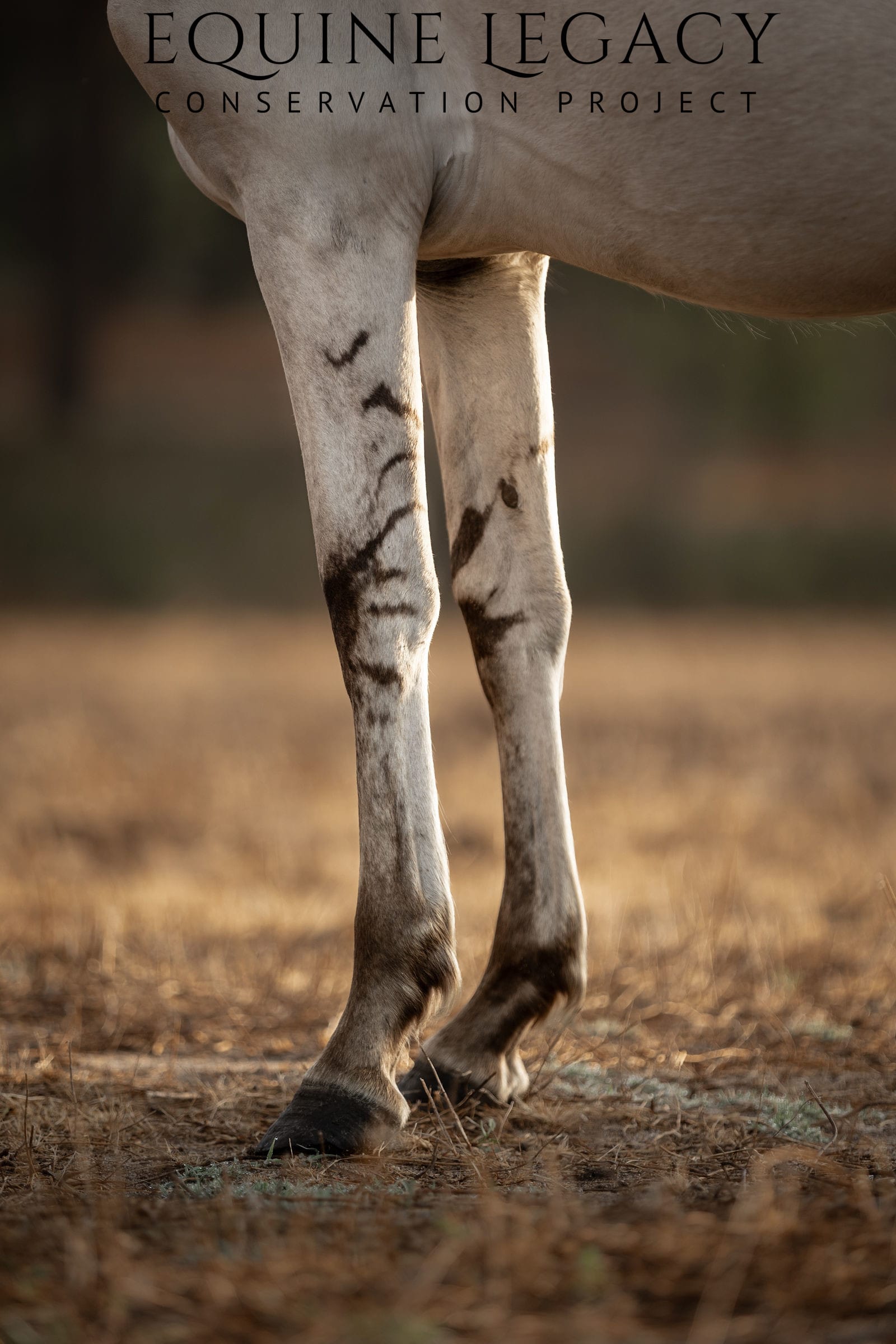
Sorraia horse, Portugal @Equine legacy Project1 |
Leg markings or stripes, also called leg barring, zebra or tiger stripes, are horizontal stripes on the legs, around the knees and hocks. The stripes can sometimes also form patchy areas on the legs. |
|---|
| face mask |
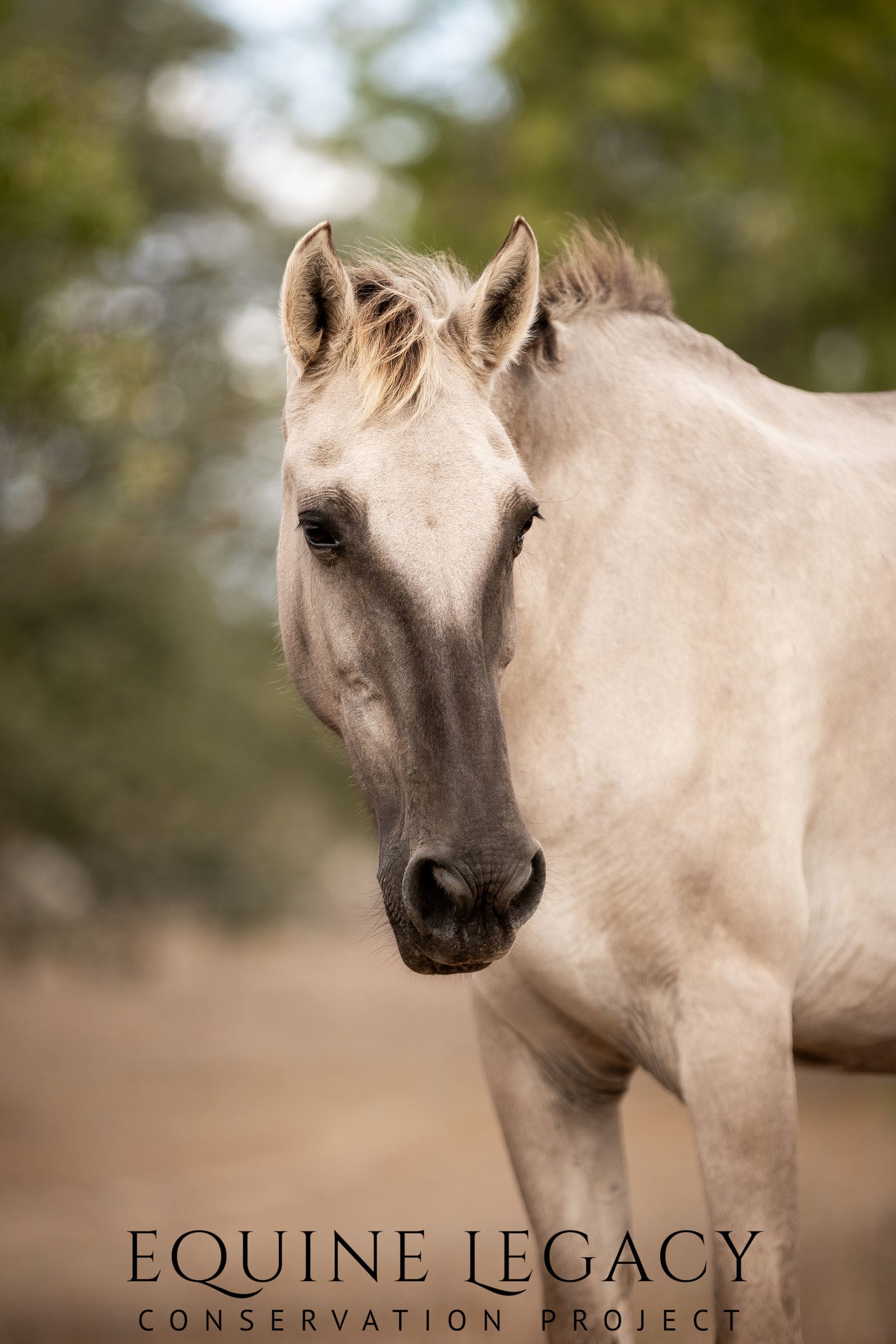
Sorraia horse, Portugal @Equine legacy Project1 |
Darker color or shading on the head, usually on the lower face and/or nose bridge, that can run up to the eyes. |
|---|
| Cob webbing |
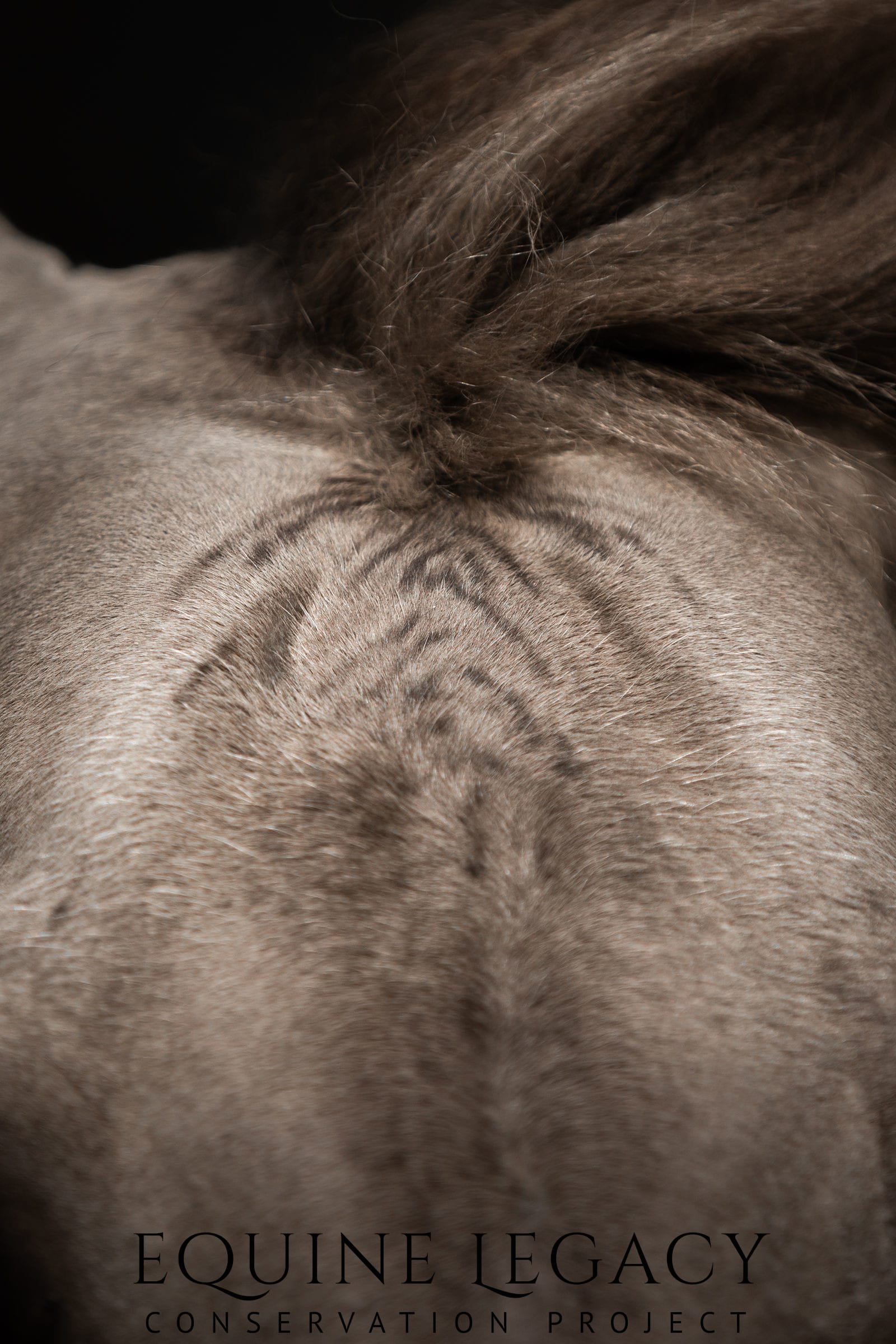
Sorraia horse, Portugal @Equine legacy Project |
Dark stripes or lines on the forehead that, as the name suggests, can look like a spiderweb on the head. |
|---|
| Ear tips |
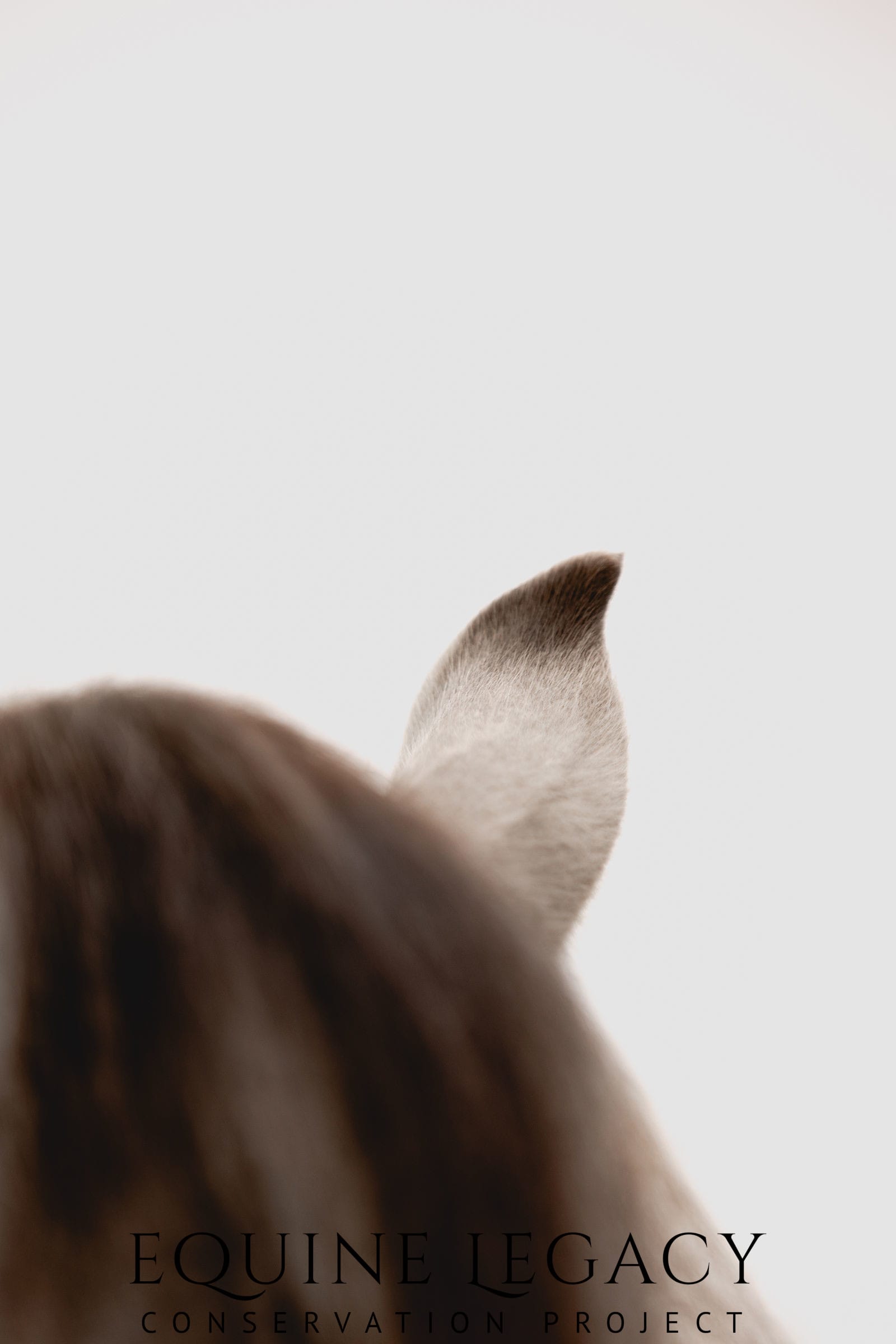
Sorraia horse, Portugal @Equine legacy Project1 |
The eartips of dun horses can be darker in color and/or show some striping. In some cases, the ears can also have pale/white tips. |
|---|
Skewed dun
| Skewed dun |
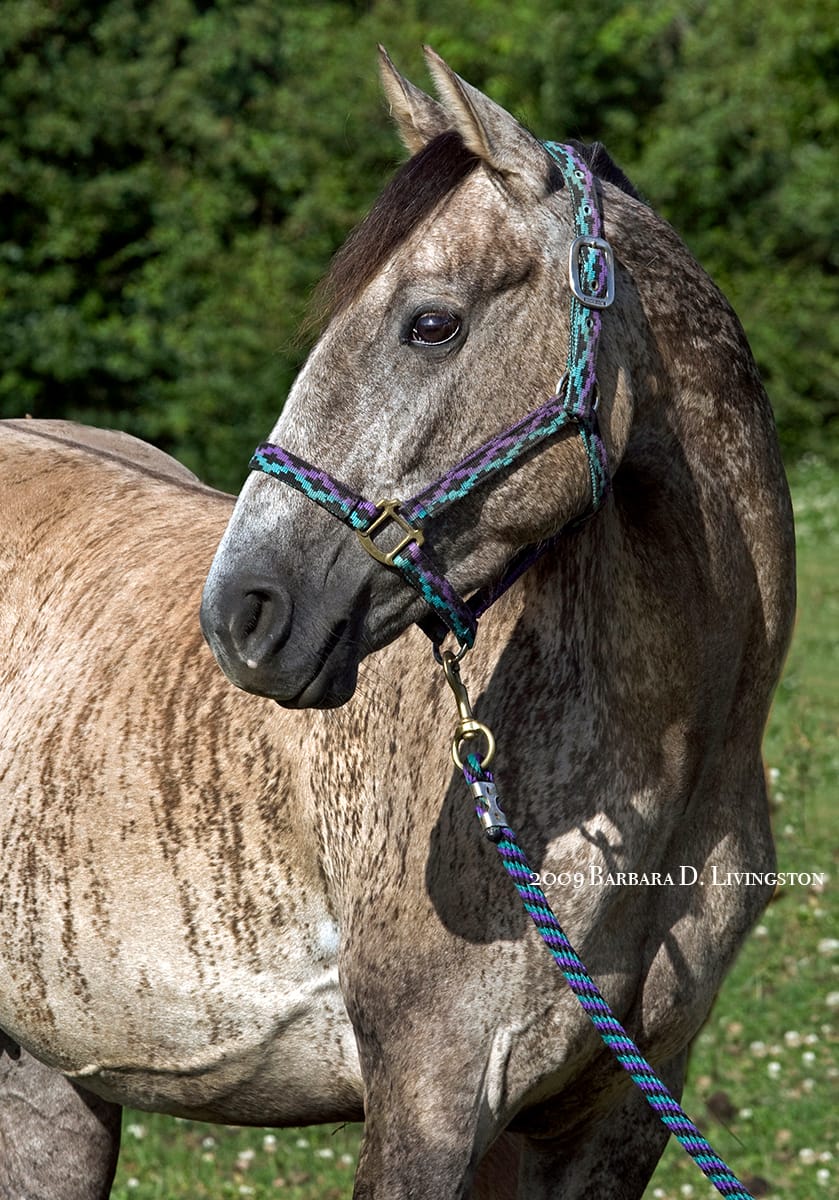
Sharp Trilogy, Quarter Horse @Barbara D. Livingston3 |
They're often called "brindle", but most of the time stripey coat patterns like this are the result of "skewed" colors or white patterns (brindle1 exists in horses, but that is a coat texture mutation, rather than a color).
along the "lines of Blaschko", resulting in just a few to a full coat of dark stripes. These lines represent the path along which cells grow and migrate during development. Although they are usually invisible, every horse has these lines! |
|---|
Frosting
| Frosting | 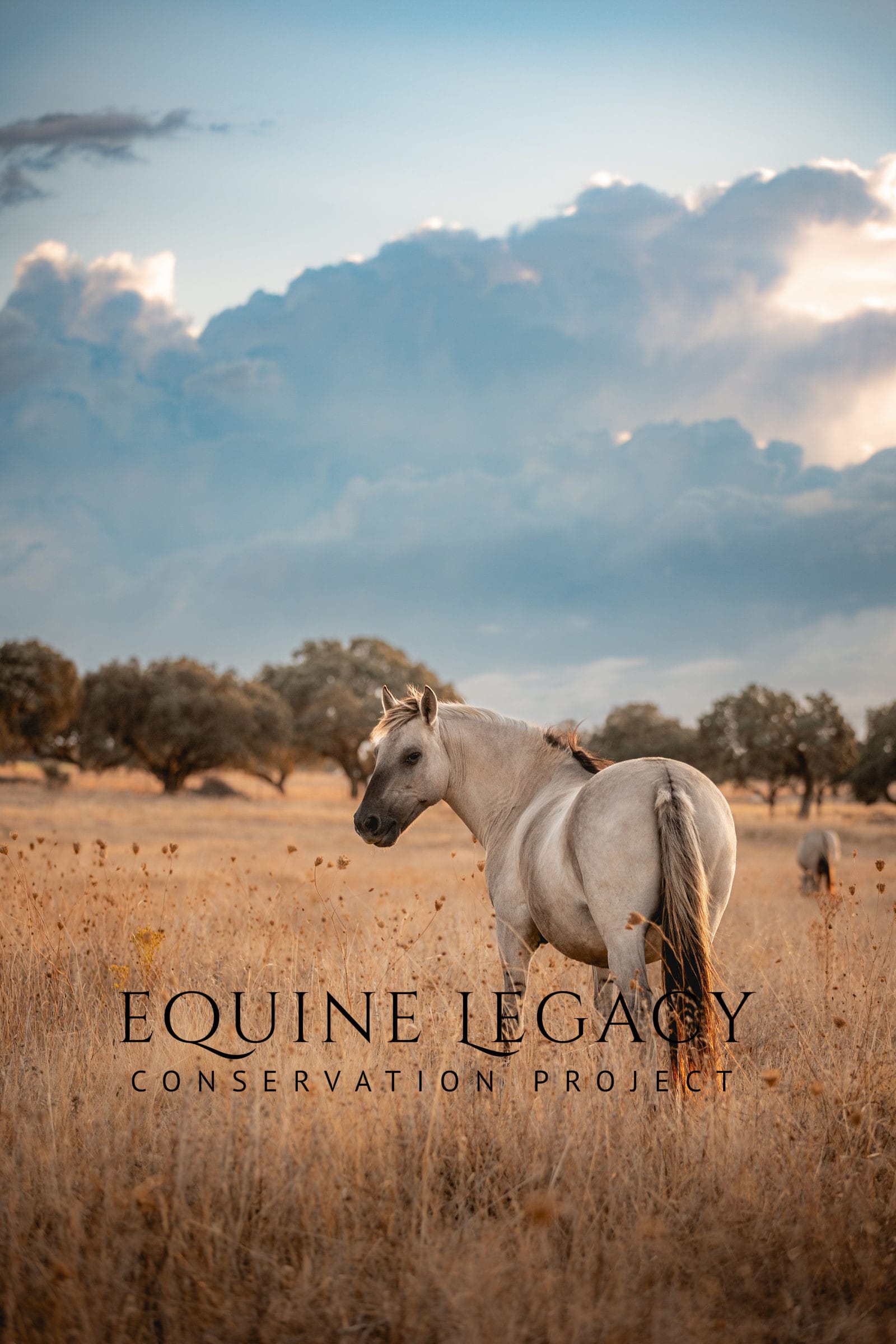
Sorraia horse, Portugal @Equine Legacy Project1 |
Frosting refers to pale/white hairs in the mane and/or head of the tail of dun (or buckskin) horses. |
|---|
Dun vs. nd1
Dun and nd1 can both cause primitive markings. The difference is that dun dilutes the coat, while nd1 does not. The primitive markings on nd1 horses also tend to be less intense. A prime example of this (and a good way to tell the difference) is that dun dorsal stripes run all the way through the tail, and the tail is darker in the middle. Nd1 dorsal stripes, on the other hand, do not.
| nd1 | 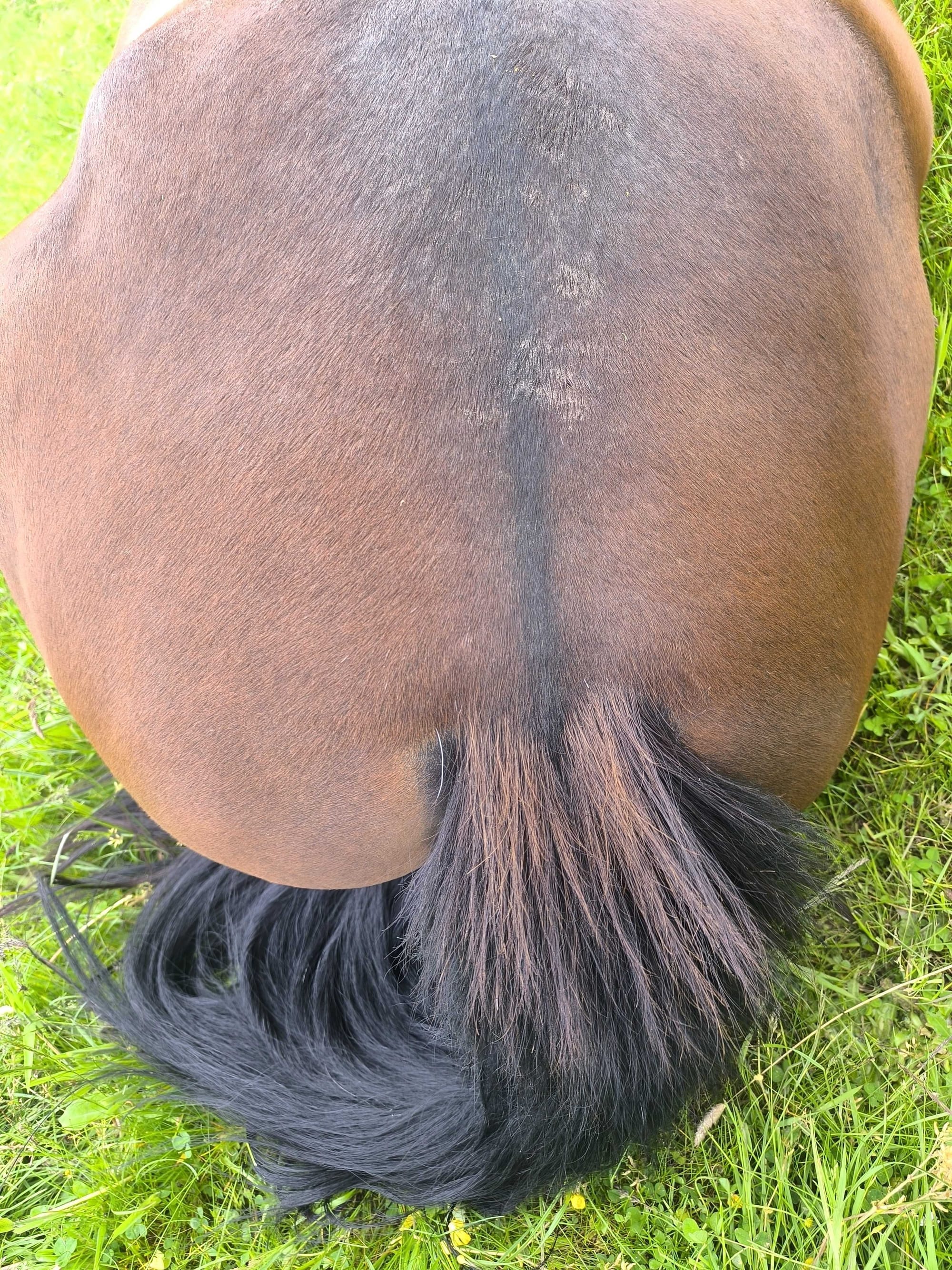
@Hannelore Roodhooft |
Dorsal stripes caused by nd1 don't run through the tail. |
|---|
Dun vs. buckskin
Bay dun horses are often confused with buckskin horses. Their coat colors can look quite similar: both can have a yellow-to-golden coat, with dark points and frosting. However, dun horses also have primitive markings, while buckskins do not!
References
All images used with permission.
- Equine Legacy Project: https://equinelegacy.minhdanvu.com/
The Equine Legacy Project is a conservation project raising awareness for endangered and rare horse breeds, powered by three women - Image adapted from: An, T.; Dugarjaviin, M.; Differential Expression of MITF, WNT3A, SLC7A11, and EDN3 in the Shoulder ‘Bider Marking’ of Dun Mongolian Horses; Animals (2026); Doi: 10.3390/ani16060967
Licensed under Creative Commons Attribution 4.0 International (CC BY 4.0).
Changes: Image cropped for clarity - Barbara D. Livingston: https://barbaradlivingston.photoshelter.com/
- Imsland, F., McGowan, K., Rubin, C. J., Henegar, C., Sundstrom, E., Berglund, J., Schwochow, D., Gustafson, U., Imsland, P., Lindblad-Toh, K., Lindgren, G., Mikko, S., Millon, L., Wade, C., Schubert, M., Orlando, L., Penedo, M. C., Barsh, G. S., & Andersson, L.; Regulatory mutations in TBX3 disrupt asymmetric hair pigmentation that underlies Dun camouflage color in horses; Nature Genetics (2015); Doi: 10.1038/ng.3475
- Masuda M. Tsunoda J., Nomura H., Kimura N., Altangerel G., Namkhai B., Dolj U., Yokohama Y.; New Primitive Marking (Bider) in Mongolian Native Horse and Equus przewalskii; Journal of Equine Science (2007); Doi: 10.1294/jes.18.145